
 ezna-io
Death of Drug Lord El Mencho: Mexico Faces Uncertain Power Vacuum
By Zoé Marquand
8 months ago

- El Mencho, CJNG leader, killed in Mexican military operation on February 22, 2026.
- Waves of violence: narcoblockades, fires, and shootings in several states.
- Geopolitical implications: US intelligence support, impact on tourism and regional security.
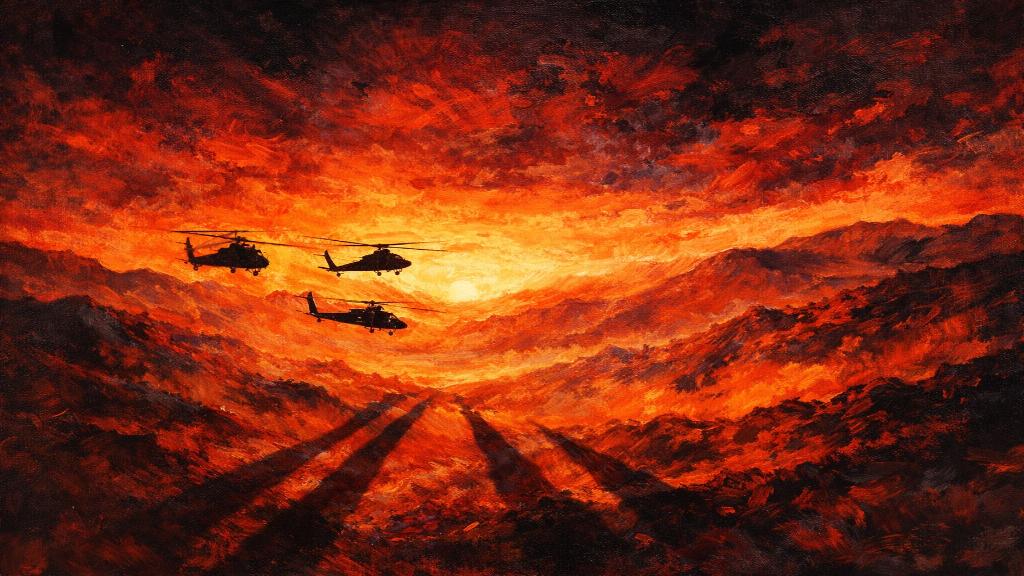
Picture the scene: dawn over Tapalpa's mountains in Jalisco, where military helicopters' shadows dance like in a Rothko expressionist painting, with red and black hues foretelling impending chaos. There, in this theatrical setting, Nemesio 'El Mencho' Oseguera Cervantes, the undisputed king of the Jalisco New Generation Cartel (CJNG), met his dramatic end on February 22, 2026. A joint Mexican army operation, with a subtle yet crucial nudge from US intelligence, ended the era of a man whose empire stretched from fentanyl labs to Puerto Vallarta's streets.
With light irony, one might say El Mencho, the elusive ghost hunted for years, was captured alive but succumbed to wounds en route to Mexico City. Twenty-five Mexican national guards died in clashes, a toll recalling human paradoxes: lives sacrificed to stop another, in a cycle akin to a contemporary artist's fractured compositions, like Basquiat's, where violence and power blend in vivid, discordant colors.
The retaliation was swift. Like act two of a Shakespearean tragedy, CJNG members sowed chaos: burned buses, blocked roads, airport attacks. In Guadalajara and Puerto Vallarta, American tourists hunker in hotels as flights halt. According to unverified sources, gunfights erupted near terminals, adding narrative tension worthy of a Hollywood thriller, but with real stakes for cultural geopolitics – for narcotrafficking isn't just drugs; it's a shadow over Mexican traditions, turning popular festivals into fear zones.

Observing from afar, with amused distance, we note human continuities: cartels, like ancient empires, crumble but rebirth. The CJNG, designated terrorist by the USA in early 2026, keeps funneling fentanyl north, tinting Mexico-Washington relations strategically. President Claudia Sheinbaum assures peace is maintained, but narcoblockade images in six states tell another story, a canvas where paradoxes intertwine: a blow against crime, but escalation risk.
Global trends reflect here, like in a contemporary art gallery: cross-border anti-crime cooperation, but also source biases. US media emphasize trapped tourists, Europeans highlight regional security implications, with no blatant bias detected.
FAQ
- What is the CJNG?
- The Jalisco New Generation Cartel, one of Mexico's most powerful criminal groups involved in drug trafficking and violence.
- Why are the USA involved?
- US intelligence aided the operation, given CJNG's role in fentanyl to the United States.
- What impact on tourism?
- Travel warnings, suspended flights, and tourists confined in affected areas.