
 ezna-io
EU-Mercosur: France protests, deal signed
By Hugo Delorme
9 months ago

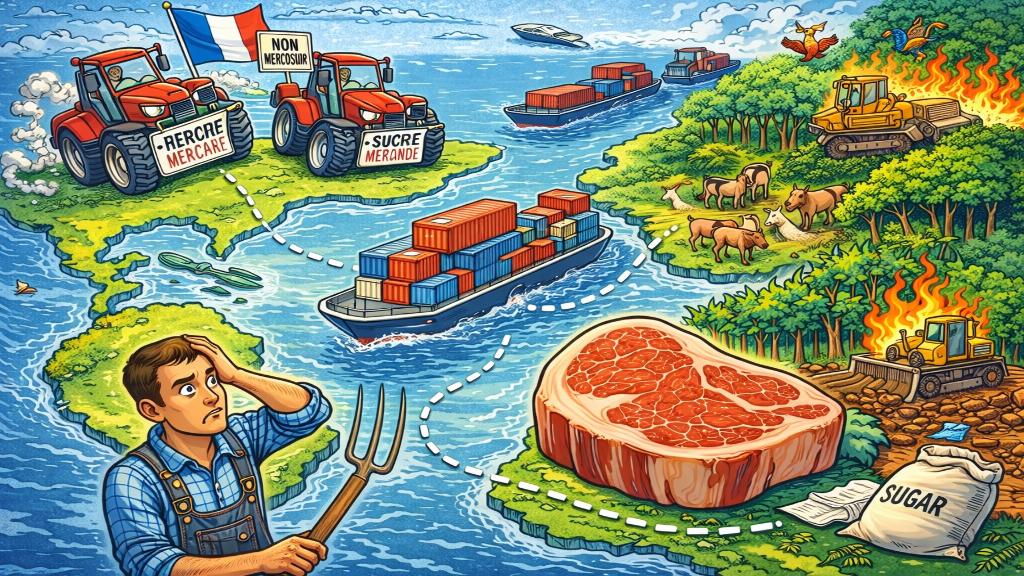
After over 20 years of talks, the EU-Mercosur agreement was concluded, creating one of the world’s largest free-trade areas. In France, anger is rising: farmers flooded Paris with tractors, reminiscent of rickshaws in India defending local streets against transport giants.
Why does France oppose the EU-Mercosur deal?
As the EU’s leading agricultural nation, France fears unfair competition. Le Monde reports South American beef and sugar imports could lower local prices by 20%, threatening thousands of jobs. AFP covers Paris protests involving 350 tractors, with farmers denouncing much laxer environmental standards in Mercosur countries.
Environmental impacts under scrutiny
Mediapart highlights risks of Amazon deforestation, often downplayed in official reports. Al Jazeera notes European media emphasize green clauses while Kommersant sees a geopolitical gain against China. Curious omission: few sources mention increased shipping-related emissions.
What parallels with other countries and international agreements?
In Ireland, thousands of farmers protested similarly (The Guardian). BBC compares it to post-Brexit UK tensions. Deutsche Welle points out Germany backs the deal for its car industry, like Japan with the CPTPP. With a touch of humor: Europe plays chess while French farmers prefer rugby – more direct and physical.

In China, deals with Mercosur increased soy imports without major protests, thanks to central planning – a striking contrast with European democracy.
Will the EU-Mercosur deal really boost the European economy?
Euronews estimates a potential 0.5% GDP gain for the EU by 2040, similar to CETA. Yet in France, INSEE forecasts roughly €1 billion in annual agricultural losses. Kommersant sees an opportunity for Russia to export to the EU while bypassing sanctions – an angle rarely covered in Western media.
FAQ
What is the EU-Mercosur agreement?
A free-trade treaty between the EU and Argentina, Brazil, Paraguay and Uruguay, sharply reducing tariffs.
Why are farmers protesting?
They fear unfair competition and lower standards, threatening jobs and prices.
What environmental impact?
Increased risk of deforestation despite green clauses; comparable to other similar agreements.