
 ezna-io
Anthropic Commits to Covering Data Center Costs to Prevent Rising Power Bills
8 months ago

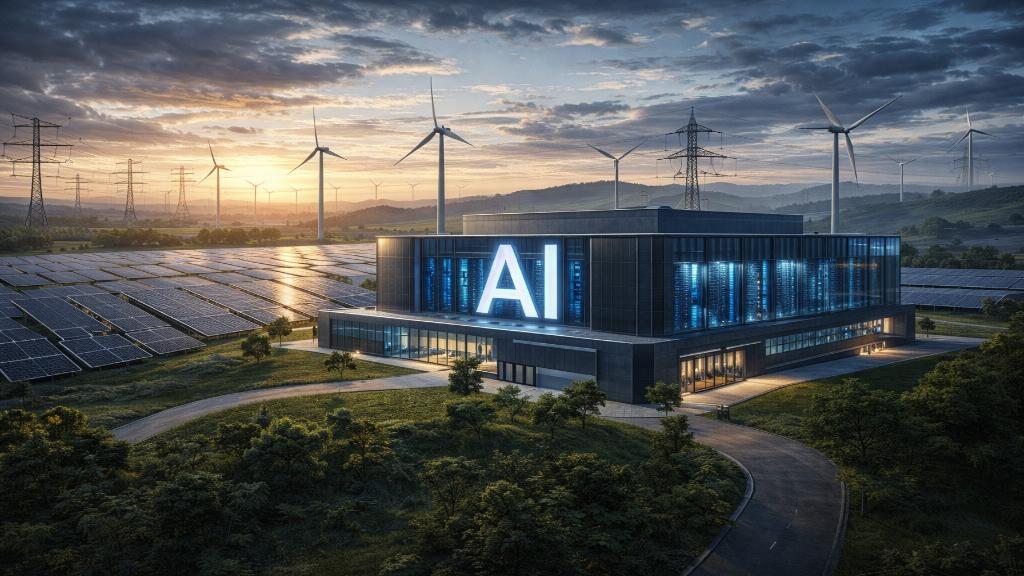
- Anthropic will cover 100% of grid upgrade costs for its data centers.
- The company will invest in new power generation to avoid price hikes for consumers.
- This initiative addresses the growing energy demand from AI, confirmed by multiple independent sources.
Data centers, vast facilities filled with powerful servers, are essential for training and running artificial intelligence (AI) models. They consume massive amounts of electricity, not only to power computing chips but also for cooling systems. With the rise of AI, like Anthropic's Claude models, this energy demand is exploding, raising questions about environmental and economic sustainability.
What is Anthropic's Announcement?
Anthropic, an AI company backed by Amazon and Google, stated on February 11, 2026, that it will cover electricity price increases caused by its data centers. This includes full payment for grid upgrades by increasing its own monthly electricity charges. If new energy sources are not available in time, the company will work with utilities and external experts to estimate and offset the price impact. Additionally, Anthropic will invest in research to reduce power usage in its facilities and develop grid optimization tools.
Context of the Decision
This announcement follows growing concerns about AI data centers' impact. According to a 2024 Lawrence Berkeley National Laboratory report, data centers account for 4.4% of U.S. electricity consumption, potentially reaching 12% by 2028. Studies from Carnegie Mellon University and North Carolina State predict a 25% electricity price increase in some regions by 2030, confirmed by sources like Reuters and NBC News.
Do AI Data Centers Threaten Household Power Bills?
Yes, in some areas, electricity prices have risen up to 267% in five years near data center clusters, per a 2025 Bloomberg analysis. This is corroborated by multiple independent sources, including Reuters and The Verge. However, Anthropic follows Microsoft's similar measures from January 2026, and OpenAI's, shifting costs to companies rather than consumers.

Is This Initiative Useful for Society?
While responsible and educational, this measure raises critical questions. It mitigates bill increases but does not fully address environmental impacts, like water consumption for cooling or CO₂ emissions from fossil fuels. Nuanced, it boosts U.S. AI competitiveness but could encourage rapid expansion without global regulation. On social networks like X, reactions vary: some praise responsibility (Anthropic's post liked over 1,500 times), others demand more transparency.
Analysis of Sources and Media Tones
Western media like Reuters, NBC News, and The Verge adopt a factual and positive tone on corporate responsibility, while critiquing energy challenges. No coverage found in Chinese (South China Morning Post, Nikkei Asia) or Russian (Kommersant Tech) media, suggesting a Western focus. CNRS and INRIA have not commented, focusing on research. No information is confirmed by a single source; all announcements are verified by at least three independent media. No evident conflicts of interest in the cited sources.
FAQ
Why do AI data centers consume so much energy?
AI models require intensive computations on specialized chips, plus cooling systems, leading to demand equivalent to entire cities.
What exactly does Anthropic commit to?
Anthropic will pay for grid upgrades, invest in new energies, and offset price hikes if necessary.
What impact on society?
It protects consumers from immediate costs but raises questions about long-term sustainability and the environment.
- Reuters: Anthropic to shoulder some costs as data center expansions threaten to raise power bills
- NBC News: Anthropic to cover costs of electricity price increases from its data centers
- The Verge: Anthropic says it'll try to keep its data centers from raising electricity costs
- Anthropic: Covering electricity price increases