
 ezna-io
Venice Biennale 2026: art, beauty and conflict
6 months ago

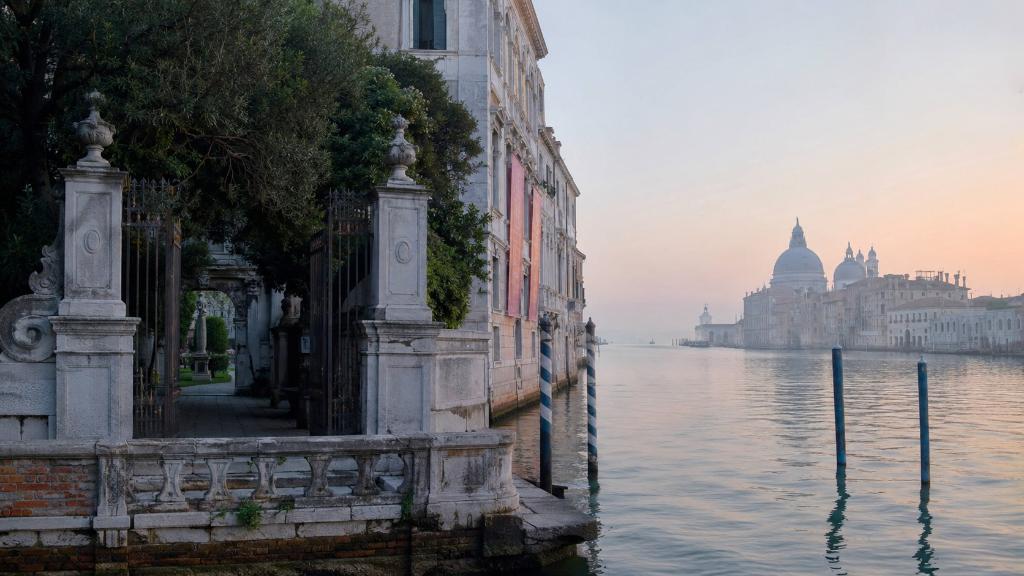
- The 61st Venice Biennale opens to the public on May 9, 2026 and runs until November 22.
- In Minor Keys, conceived by Koyo Kouoh, officially brings together 110 invited participants.
- La Biennale lists 100 national participations and 31 collateral events, after Iran’s withdrawal.
- The edition links material beauty, artistic inheritance and documented political tensions.
The 61st International Art Exhibition in Venice opens to the public on May 9, 2026, after preview days on May 6, 7 and 8, and runs until November 22. According to La Biennale di Venezia, it unfolds at the Giardini, the Arsenale and various locations across Venice. Its title, In Minor Keys, was chosen by Koyo Kouoh, the Swiss-Cameroonian curator who died in May 2025. The institution states that the exhibition is being carried out with the support of her family and according to the project she had defined before her death.
The central cultural subject is therefore not simply the opening of an international art event. It is the way Venice holds together three registers: the search for beauty, the transmission of artistic craft and the pressure of contemporary politics. The scale is verifiable: 110 invited participants, including individual artists, duos, collectives and artist-led organisations; 100 national participations and 31 collateral events. These figures require an international reading, but they do not alone explain the aesthetic interest of the edition.
What emerges from the first sources is a renewed attention to worked materials. Wood, glass, clay, textile, painting, the performing body and spatial devices appear as ways to reintroduce time into the exhibition. The French Ministry of Culture describes the French pavilion in relation to the invisible, the slow and the ancestral. Le Monde stresses the diplomatic controversies surrounding several pavilions. The official pages of La Biennale emphasize resonances and convergences among practices from distant geographies.
The international comparison of media coverage shows distinct focal points. La Biennale, as an institutional source, provides dates, lists and rules, while naturally defending the continuity of its event. Associated Press frames the opening as a highly contested edition, marked by the absence of a traditional jury and by tensions around Russian and Israeli participation. Reuters focuses on Marina Abramovic and the physical participation of the visitor. The Guardian documents pavilion closures and the May 8 protests. Gulf-based media such as Asharq Al-Awsat give more space to archaeological memory and forms connected to the Arab world. Xinhua, through its article on Italian Renaissance masterpieces shown in Beijing, offers a useful counterpoint: European artistic heritage also circulates through Asian institutions.
Several aesthetic examples reinforce the material angle. The Guardian notes works involving wood, Murano glass and sensory installations, confirming the persistence of contemporary art attached to material presence. Wallpaper also points to Ranti Bam’s clay sculptures, grounded in a direct relation between body and matter. Asharq Al-Awsat describes, in the Saudi pavilion, an artistic map composed of thousands of clay pieces, shaped, sun-dried in Riyadh and colored with natural pigments. That last detail comes from a regional media source; it should be checked against full pavilion documents, but it already indicates a legible formal choice: turning archaeology into a method of making rather than a merely documentary subject.
The precision of the materials gives the exhibition part of its force. The works cited are not simply installations in a broad sense: they involve identifiable techniques, surfaces that invite close looking and objects the eye can almost weigh. Murano glass recalls a Venetian tradition of blowing and translucency; Ranti Bam’s clay engages bodily pressure; the Saudi pavilion pieces, according to the cited source, combine sun, pigment and cartographic fragmentation. The point is not to freeze the contemporary in the past, but to observe how a present form can still be born from an old gesture.

Marina Abramovic’s presence at the Gallerie dell’Accademia adds a more ambiguous layer. Reuters reports that her exhibition Transforming Energy, presented alongside the Biennale season, greets visitors with bones and crystals, and asks the public to participate rather than merely watch. The Gallerie dell’Accademia states that the project brings together works such as Rhythm 0, Imponderabilia, Light/Dark, Balkan Baroque and Carrying the Skeleton, in dialogue with the history of Venetian painting. The contemporary is therefore not presented only as rupture; it is measured against duration, the body, old images and the discipline of looking.
That reminder must, however, be complete. Since the 1970s, Abramovic has built her practice around deliberately extreme performance, using her own body as material, limit and testing ground. The MoMA presents Rhythm 0, performed in Naples in 1974, as an action during which the artist remained still while the public could use 72 objects on her. The work is often read as a brutal exposure of spectator responsibility and the possible violence of a group. The controversial character of her artistic career is therefore grounded in documented facts: endurance, pain, nudity, ritual imagery, exposure of the body and sometimes hostile public reception.
It is nevertheless necessary to distinguish documented provocation from unsupported accusations. Spirit Cooking, a 1996 performance, was linked to conspiracy theories during the 2016 American campaign. Artsy reports that those interpretations distorted the work and fed the false Pizzagate narrative. MIT Press describes Spirit Cooking as a little-known performance made in an Italian gallery with inscriptions in pig’s blood, not as evidence of criminal practice. A rigorous article should therefore recall Abramovic’s controversial past without turning unproven accusations into facts.
The political tension of the edition is, by contrast, established by several sources. On April 30, La Biennale announced the resignation of the five members of the international jury: Solange Farkas, Zoe Butt, Elvira Dyangani Ose, Marta Kuzma and Giovanna Zapperi. As a result, the Visitors’ Lions mechanism acquires unusual importance. According to the rules published on May 9, only ticket holders who have visited both the Giardini and the Arsenale can vote; the system then sends an email link, and each visitor may vote once for a participant in the international exhibition and once for a national participation. The results will be announced at the close on November 22, 2026.
The protests are also documented. The Guardian reports that about a dozen pavilions were affected by a strike or closures on May 8, while an activist organisation had initially announced a higher figure. That difference between announcement and observed participation requires precision. Associated Press describes an opening without a jury amid disputes linked to Russian and Israeli participation. These elements belong to the public context of the exhibition. The deeper intentions attributed to states, artists or organisers should not, however, be asserted beyond available quotations.
The interest of this Biennale, for a publication devoted to traditional art, design and beauty, is precisely that the event should not be reduced to controversy. Venice reminds us that art can remain a place of material transmission even when surrounded by current conflicts. A clay work, a curtain of glass, a slow painting, a silent room or a bodily performance can impose another temporality: that of the hand, the surface, repeated effort and memory. This temporality does not erase political debate, but it prevents the artwork from being absorbed by it immediately.
The biases of the sources can be identified without invalidating the information. La Biennale is institutional and concerned with preserving the coherence of its narrative. Associated Press and Reuters prioritize verifiable public facts and procedural news. The Guardian gives significant space to protest and critical visitor experience. Gulf-based media naturally highlight certain regional presences. Xinhua stresses heritage diplomacy and cultural exchange. No direct conflict of interest was established in the sources used, but each outlet selects angles according to its audience, geography and function.
What can be stated with confidence is therefore limited but solid: the Biennale opens to the public on May 9, 2026; it runs until November 22; it follows Koyo Kouoh’s posthumous project; it brings together 110 invited participants, 100 national participations and 31 collateral events; the international jury has resigned; a public vote has been introduced; several media report tensions linked to Russian and Israeli participation. What remains uncertain is the exhibition’s lasting public reception, the real significance of visitor voting and some pavilion details that will need to be confirmed through catalogues, full statements and post-opening assessments.
FAQ
Why can this Biennale be covered through beauty?
Because several sources describe an edition attentive to materials, slow gestures, technical inheritance and the visitor’s physical relation to artworks.
Which figures are verified?
Official sources indicate a public opening on May 9, 2026, a closing date of November 22, 110 invited participants, 100 national participations and 31 collateral events.
What should be retained about Marina Abramovic?
Her past is controversial because of extreme and ritual performance works, but conspiracy accusations linked to Spirit Cooking are not established and should be treated as documented distortions.
- La Biennale di Venezia — Biennale Arte 2026
- La Biennale di Venezia — invited artists
- La Biennale di Venezia — national participations and collateral events
- Associated Press — Venice Biennale opens without a jury
- Reuters — Marina Abramovic in Venice
- The Guardian — Venice Biennale pavilion protests
- Wallpaper — In Minor Keys review
- Gallerie dell’Accademia — Marina Abramovic: Transforming Energy
- MoMA — Marina Abramovic, Rhythm 0
- Artsy — Spirit Cooking and conspiracy distortions
- MIT Press — Marina Abramovic’s Spirit Cooking
- Asharq Al-Awsat — Saudi Pavilion at Venice Biennale
- Xinhua — Italian Renaissance masterpieces in Beijing