
 ezna-io
Precious Metal Catalysts: How Electron Sharing Drives Modern Chemistry
a year ago

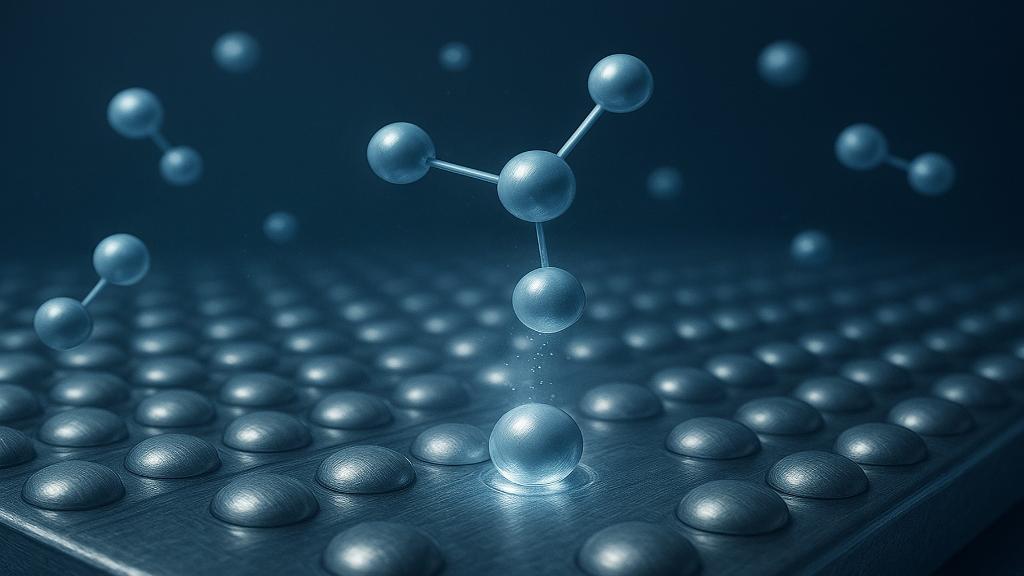
- A new method measures fractional electron transfer on precious-metal catalysts.
- Promising innovation, still limited to laboratory conditions.
- Media coverage mainly driven by scientific aggregators.
- Industrial and societal impacts not yet confirmed by independent sources.
Precious metals play a crucial role in catalysis, from hydrogen production to CO2 conversion. A recent academic study introduced an experimental technique able to quantify tiny fractions of electron transfer between an adsorbed atom and a metal surface. This capability offers rare insight into the fundamental interactions governing catalytic efficiency.
The approach, based on a specialized “catalytic capacitor”, tracks charge variations when hydrogen interacts with platinum. While the method raises significant interest within scientific circles, its real-world impact remains uncertain.
Despite the excitement, there are clear limitations: the setup is technically demanding, restricted to controlled laboratory environments, and its industrial relevance has not yet been validated by independent studies. As such, the technique should be seen as a promising milestone rather than a definitive breakthrough.

Media coverage reflects this intermediate status. Scientific aggregators and university press releases have widely circulated the findings, but major technology outlets have not yet provided independent analyses. Western sources offer clear and explanatory coverage, whereas major Asian and Russian outlets have barely mentioned the topic, limiting comparative assessment.
Ultimately, the societal relevance of this technique depends on its reproducibility, its application to other catalytic systems, and its usefulness in designing cheaper or more durable catalysts. For now, it remains a promising tool awaiting broader validation.