
 ezna-io
Stage Costume: CNCS Reveals Hidden Heritage
6 months ago

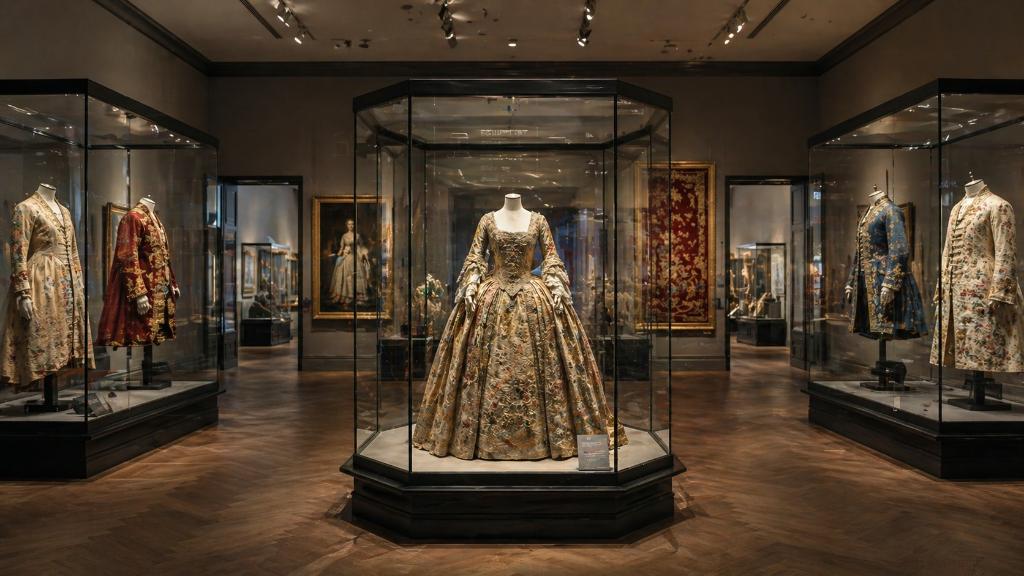
- CNCS marks 20 years with over a hundred costumes on display since April 2026
- A collection exceeding 10,000 pieces, with less than 1% shown at once
- Costumes analyzed through structure and stage function
- Precise techniques used to slow textile degradation
On April 25, 2026, the National Center of Stage Costume in Moulins opened 'Tous en scène ! 20 years of collections'. The exhibition presents over a hundred pieces, around 120 according to some sources, from a collection exceeding 10,000 costumes. This represents less than 1% of the total holdings, highlighting the gap between what is preserved and what is displayed. Lighting is deliberately reduced. Display cases are low and discreet. As the eye adjusts, textures and folds become visible.
According to Le Monde, some garments are displayed flat due to fragility. This reflects specific constraints: weakened fibers, heavy embroidery and deformation under gravity. Costumes are not static objects; they continue to evolve under environmental conditions.
Sarah Bernhardt's 'Ruy Blas' gown provides a clear example. The bodice is structured with internal boning that redistributes weight. Layered fabrics create thickness, reinforced by dense embroidery likely made with metallic threads. The overall weight generates continuous stress on seams, especially at junction points. Vertical display would impose constant strain and risk structural damage.
A Christian Lacroix costume follows a different logic. Volumes are wide and visually light. Layers of silk alternate between matte and reflective surfaces. Under stage lighting, these materials diffuse light and enhance movement. In a museum, these same features become fragile zones: attachment points concentrate stress, seams endure irregular forces and structural balance becomes unstable over time.
Thierry Mugler's Macbeth costume adopts a distinct technical approach. Black leather absorbs light and minimizes reflection. Angular lines reinforce the silhouette. While less sensitive to light exposure, the material hardens over time, becomes less flexible and reacts to humidity. Articulated areas become vulnerable to cracking and deformation.
These construction features become conservation requirements in the museum. Designed for performance, costumes must now be stabilized to limit progressive alteration while remaining legible.

Conservation relies on measurable factors. Light levels are controlled to prevent fading. Costumes are sometimes displayed flat to distribute weight evenly. Handling is minimized and follows strict protocols. In some cases, rotation may be considered to reduce exposure, although this is not systematically documented.
As stated in In Situ, the CNCS mission is to 'collect, preserve, study and promote' these objects. Director Delphine Pinasa notes that 'costumes are designed to live on stage, yet must now endure over time', requiring a balance between visibility and preservation.
The museum welcomed around 90,000 visitors in 2025, based on institutional data reported in the press. This confirms the relevance of a specialized institution outside major capitals.
No significant conflict of interest appears in the sources. Some data remains incomplete, including restoration details and final attendance figures.
Stage costumes were not designed to last. The museum slows their alteration and frames their evolution over time.
FAQ
Why are some costumes displayed flat?
To reduce fiber stress and prevent deformation.
How many costumes does CNCS hold?
Over 10,000 pieces.
What is the museum attendance?
Around 90,000 visitors in 2025.