
 ezna-io
France’s Agricultural Crisis: Blockades
By Hugo Delorme
10 months ago

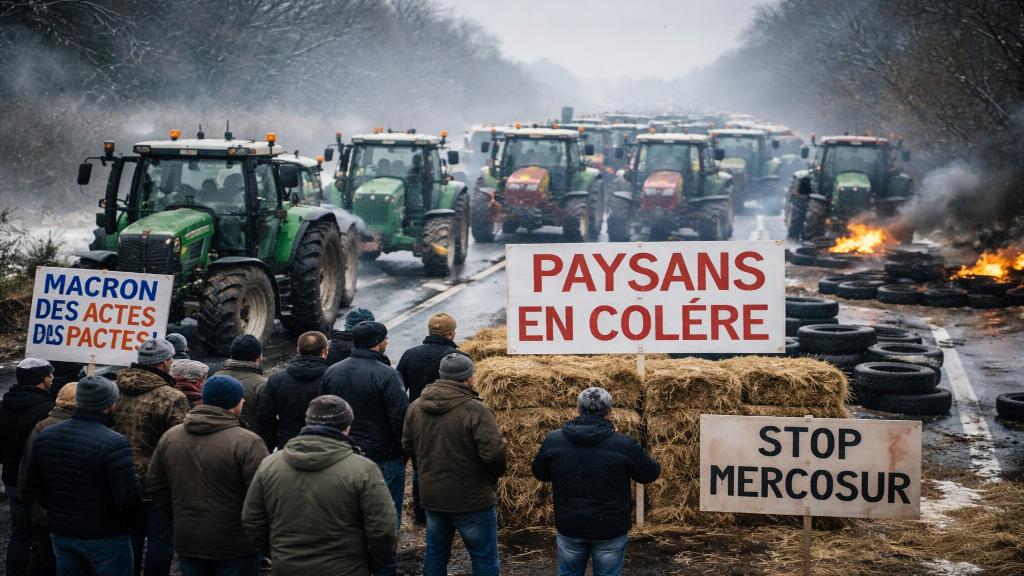
- French farmers maintain road blockades against policies on lumpy skin disease and opposition to the EU-Mercosur trade deal despite a government call for a Christmas truce.
- The lumpy skin disease outbreak and controversial mass culling strategy have intensified tensions.
- Concerns over trade competition and global agricultural policy connect these events to broader international farmer movements.
Farmers in France continue blocking major roads and highways, particularly in the southwest and on routes like the A75, in protest against government decisions related to animal disease control and foreign trade agreements. The debate initially centered on the government’s method of handling lumpy skin disease, a viral infection among cattle that is not harmful to humans but harmful to livestock economics.
French authorities’ approach to culling entire herds after a single detection has been sharply criticised by unions such as Coordination Rurale and Confédération Paysanne, who argue the strategy is disproportionate and economically damaging for family farms.
Concerns about the EU’s free trade agreement with the Mercosur bloc (Argentina, Brazil, Paraguay and Uruguay) have added fuel to the protests, with French farmers wary of cheaper imports and differing regulatory standards. The signing of the pact has been postponed to January 2026 while negotiators attempt to add safeguards for European agriculture.

The government has urged a Christmas ceasefire, intending to reduce disruptions over the holiday period, but some unions have not committed to halting their blockades. In response to disease spread, the French army has been mobilised to support cattle vaccination efforts across affected regions.
Similar agricultural protests have occurred abroad — for instance, in Germany where farmers have contested environmental reforms, and in Poland where farmers organised warning protests against Mercosur-related policies — illustrating a wider debate about global trade, local protection, and agricultural sustainability.
Online reactions reflect divisions between support for rural livelihoods and criticism of protest disruptions. These debates highlight broader tensions over national agricultural policy in an interconnected global economy.
- Reuters – French government calls for Christmas truce in farmer protests
- Yahoo News – Agricultural mobilization prompts calls for Christmas truce
- CGTN – French farmers furious after cattle culls for lumpy skin disease
- AA – Mobilization against total culling
- The Beef Site – France deploys army for cattle vaccinations