
 ezna-io
US-Iran talks in Islamabad test peace under pressure
By Zoé Marquand
6 months ago

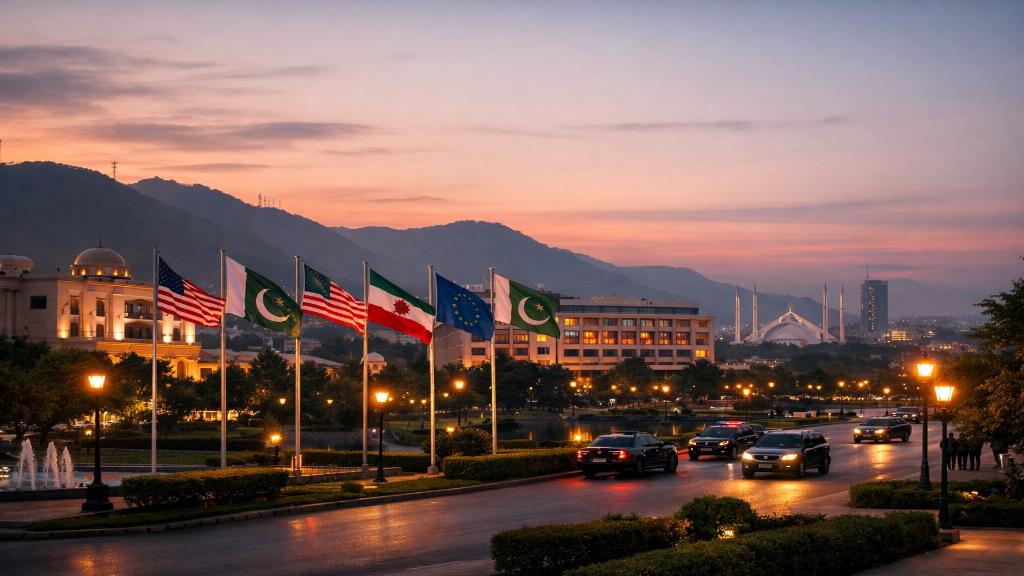
- The US and Iran opened their highest-level direct talks since 1979 in Islamabad.
- The talks follow six weeks of conflict and a fragile ceasefire.
- The Strait of Hormuz, carrying 20% of global oil, is central.
- Progress remains uncertain despite continued dialogue.
Islamabad emerged on April 11 as an unexpected diplomatic crossroads between Washington and Tehran. According to Reuters and AP, the two countries launched their most significant direct talks since 1979, when Iran’s revolution led to the breakdown of diplomatic relations. The mere return to direct dialogue is itself a strategic development.
The Serena Hotel, described by Reuters as a large secured complex, reflects a pragmatic form of diplomacy. Far from ceremonial summits, the talks take place after more than six weeks of conflict, which left thousands dead according to AP, and under a fragile ceasefire.
US Vice President JD Vance set the tone: 'We're looking forward to the negotiation. I think it's going to be positive', while warning Iran not to 'play us'. The message combines openness with caution.
A dialogue shaped by historical rupture
Since 1979, direct US-Iran contacts have been rare and often indirect. This return to open dialogue reflects necessity more than reconciliation. High-level delegations on both sides highlight the importance of the moment.
Pakistan positions itself as a regional stabilizer. Prime Minister Shehbaz Sharif expressed hope that the talks would be a 'stepping-stone toward durable peace in the region'.
Hormuz as a global pivot
The Strait of Hormuz is central, carrying around 20% of global oil trade. Any disruption directly impacts energy prices and global shipping costs.
Hormuz is not just another issue. It is the validation variable of the process. Without clarity, diplomacy remains theoretical.
Oil prices rising above 90 dollars per barrel, noted by AP, highlight this dependency. Over time, instability could also fuel global inflation through higher energy and logistics costs.

Opaque negotiations
Positions remain distant. Iran seeks sanctions relief, access to frozen assets and security guarantees. The US focuses on regional stability, maritime security and nuclear concerns.
Some Iranian claims of progress, relayed by Xinhua, remain unverified by Reuters or AP.
Different narratives
Western agencies emphasize caution and uncertainty. Xinhua highlights procedural progress. Pakistan underscores mediation success.
These perspectives reflect differing priorities rather than contradictions.
An open-ended process
No agreement has been announced. However, continued dialogue is itself significant. It suggests that diplomacy remains a viable path.
Islamabad represents a fragile diplomatic window rather than a resolution.
FAQ
Why are these talks historic?
They are the highest-level direct US-Iran talks since 1979.
Main issue?
The Strait of Hormuz and regional stability.
What remains uncertain?
Claims about frozen assets are not independently confirmed.