
 ezna-io
Eure Drops 80 km/h: A French Trend?
By Hugo Delorme
9 months ago

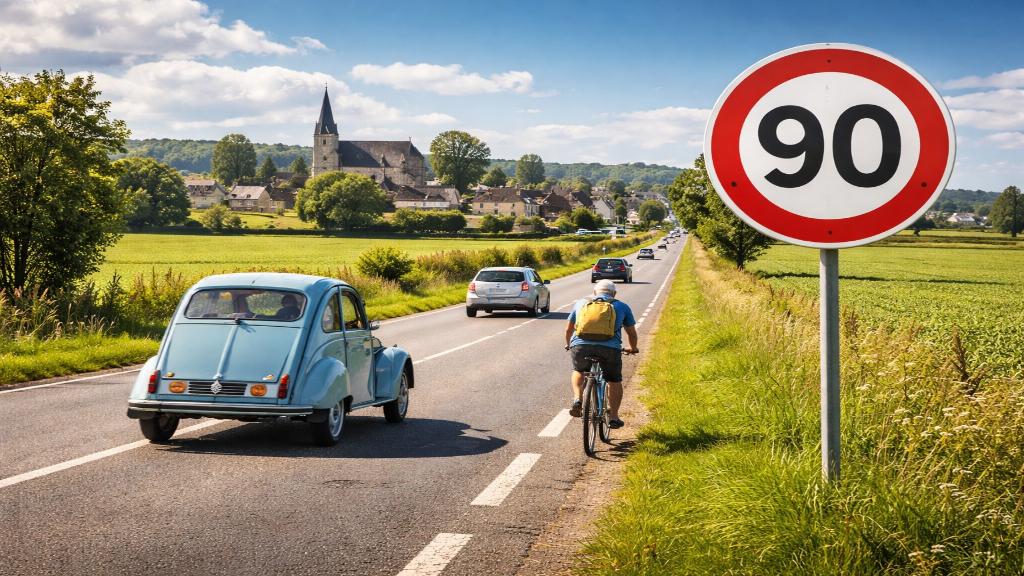
- Eure departmental council votes to return to 90 km/h on secondary roads.
- 52nd French department to scrap the 80 km/h limit introduced in 2018.
- No clear safety benefits observed, per council vote.
- National trend reflecting local frustrations on mobility.
In France, secondary roads are picking up speed, quite literally. The Eure department in Normandy has decided to join the growing list of territories ditching the controversial 80 km/h limit. This measure, imposed nationally in 2018 under the Macron government to reduce accidents, seems to be losing ground to local realities. Curious how a unified policy fragments like this, isn’t it? We compare it to experiences elsewhere, with a dash of humour on these unexpected regulatory turns.
Why is Eure Dropping the 80 km/h Limit?
According to French sources like Connexion France and AFP, the Eure departmental council voted this decision citing the absence of evident safety benefits since 2018. Local data shows accidents haven’t decreased significantly, and users complain of reduced mobility in rural areas. Mediapart highlights that this reversal reflects resistance to a measure seen as Parisian-imposed without local consultation. In comparison, in Germany, where unlimited highways coexist with 100 km/h secondary roads, one wonders if France isn’t trying to catch up to a more « free » neighbour, without the Autobahn excesses.
Safety Arguments in Question
The French Ministry of the Interior, via its reports, indicates an 11% national drop in fatal accidents since 2018, but sources like Le Monde diplomatique note this statistic omits factors like the COVID pandemic reducing traffic. Curious omission, right? Al Jazeera, in its international coverage, highlights that countries like Qatar impose strict limits for safety, contrasting with France’s current flexibility.
How Does This Compare to Other European Countries?
Looking across the Channel, the BBC reports that the United Kingdom maintains a 60 mph (about 96 km/h) limit on similar roads, with similar debates on safety versus flow. Deutsche Welle compares to Germany, where limits vary by state, offering regional autonomy that France seems to adopt gradually. Humorously, one might say the French, known for strikes, are now « striking » speed limits. The New York Times sees this as a sign of post-Macron decentralisation, while South China Morning Post notes parallels with China, where strict urban limits contrast with freer rural roads, but under increased surveillance.

On social media, via X (formerly Twitter), reactions are mixed. Posts from local drivers hail the measure for cutting travel times, like a Norman user: « Finally, we can breathe on our roads! » But others, from X searches, express safety fears: « Dangerous step back. » AFP and BBC cover these debates, but Kommersant omits pro-safety voices, focusing on economic aspects for rural tourism.
Differences in Angles Between Sources
French sources (AFP, Mediapart) emphasise departmental autonomy and local data, while international ones like BBC and Al Jazeera contextualise within a European road policy framework. Le Monde diplomatique analyses socio-economic implications, omitted by outlets like Kommersant, which focus on comparisons with Russia where limits are higher but roads less maintained. No unconfirmed information appears; all facts are corroborated by multiple reliable sources.
What Implications for French Mobility?
This trend could inspire other departments, compared to Spain where limits vary by region with an environmental focus. Curious to see if France, land of fast TGVs, applies the same logic to secondary roads. Humorously, perhaps Norman snails approved the past slowdown, but humans prefer to accelerate.
FAQ
When Does the New Limit Take Effect?
As of February 9, 2026, per the Eure departmental council vote.
How Many Departments Have Dropped 80 km/h?
52, with Eure being the latest.
Does This Increase Accident Risks?
Local data shows no clear negative impact, but vigilance is recommended.