
 ezna-io
Europe’s Idle Savings: Why the EU Struggles to Mobilize Trillions in Household Wealth
By Léo Piquemal
a year ago

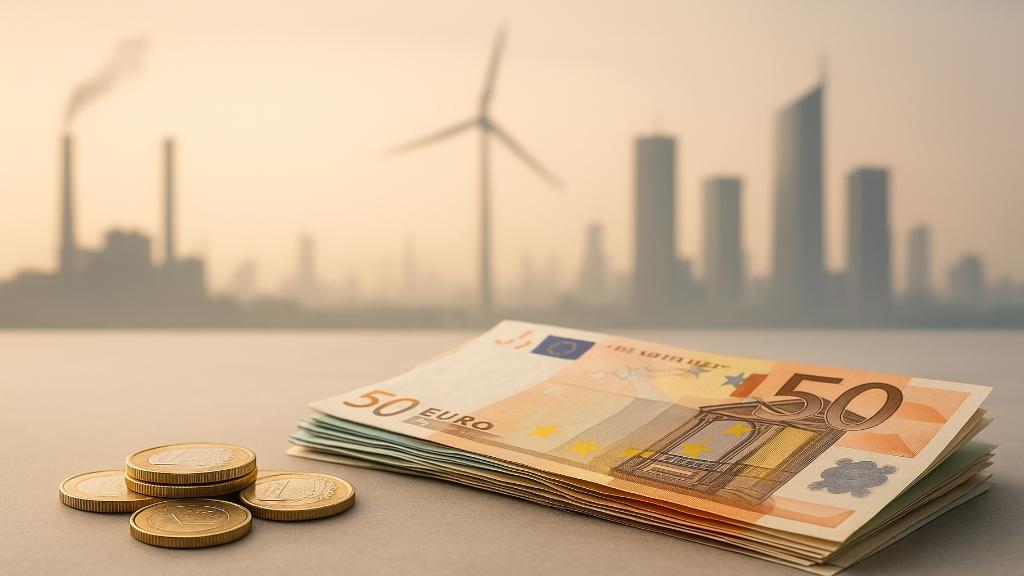
- EU households hold around €10,000–€12,000 billion in bank deposits — a massive, low-yield savings pool.
- The Savings and Investments Union (SIU) aims to redirect part of this savings toward capital markets to finance real economy, but institutional, cultural and regulatory obstacles remain strong.
- Initiatives such as the “Finance Europe” label try to steer savings toward European investments — yet skepticism and lack of simple investment options slow progress.
In spring 2025, the European Commission formalised its strategy of the Savings and Investments Union, designed to turn a structural weakness — the surplus of idle liquid savings — into a strategic asset. The official text states that about 70% of households’ savings — roughly €10,000 billion — are held in bank deposits, considered “safe and liquid” but offering low returns.
In fact, reality may be even larger: a 2025 report shows households increased their cash and deposit holdings by 15% over the last five years, bringing the total to €12.1 trillion — about 30% of their total financial wealth. In countries like Germany, over 40% of households’ financial assets are held in cash or deposits, while only 12% is invested in equities.
This imbalance has concrete effects: these idle funds are not financing innovation, small and medium enterprises (SMEs), ecological transition — all critical needs for Europe's economy. That’s why SIU aims to redirect part of this savings to capital markets, to support productive investment, strengthen Europe’s competitiveness and boost strategic economic autonomy.
But converting savings into investment is not only a technical operation: it’s a cultural and institutional challenge. Despite over 60 legislative proposals since 2015, completing market integration and creating a harmonised framework remains slow, due to conflicting national priorities, regulatory complexity, and shifting political agendas.
To overcome these obstacles, several member states — France, Spain, Germany, Netherlands, Luxembourg, Portugal and Estonia — launched in 2025 the “Finance Europe” label. The aim: offer savers clearly identified investment products backing the European economy, encouraging private savings to help fund collective growth.
Yet the call for investment clashes with social reality: many citizens distrust financial markets, fear fees and volatility, or say they lack time or knowledge for long-term investment. A former market regulator summarised the sentiment: “I may be no expert, but I’m not stupid.”
Another major barrier is financial literacy, which remains very low. According to a 2023 Eurobarometer survey cited by the Commission, only 18% of EU citizens have a high level of financial knowledge. Even simplified investment-savings accounts (requiring as little as €10 per month) struggle to attract savers.
Finally, a bias emerges: the push by the Commission and asset managers coincides with the interests of the financial industry. Funds, banks, and management companies stand to benefit from an inflow of private capital, through management fees, structured products, and pilot-managed portfolios — which risks turning a public-interest narrative into a private profit opportunity.

Without a genuine social contract — combining transparency, financial education, fiscal incentives and accessible offerings — the risk is that the reform remains theoretical. The €12,000 billion in savings will remain a frozen figure, and Europe’s economy may continue to lack the capital it needs for its industrial, ecological and technological ambitions. This is not only a matter of return for households: it is a matter of sovereignty, resilience and economic equity.
- EU takes small steps in uphill struggle to wean savers off cash — Reuters, 2 December 2025
- Savings and Investments Union: better opportunities for EU citizens and businesses — European Commission, 19 March 2025
- Savings and Investments Union – Council of the EU, 2025
- Launch of the “Finance Europe” label — French Ministry of Finance, 6 June 2025
- The EU boosts financial literacy and opens new investment doors — Forum for the Future, 3 October 2025