
 ezna-io
New START Expiration: A New Nuclear Era?
By Zoé Marquand
9 months ago

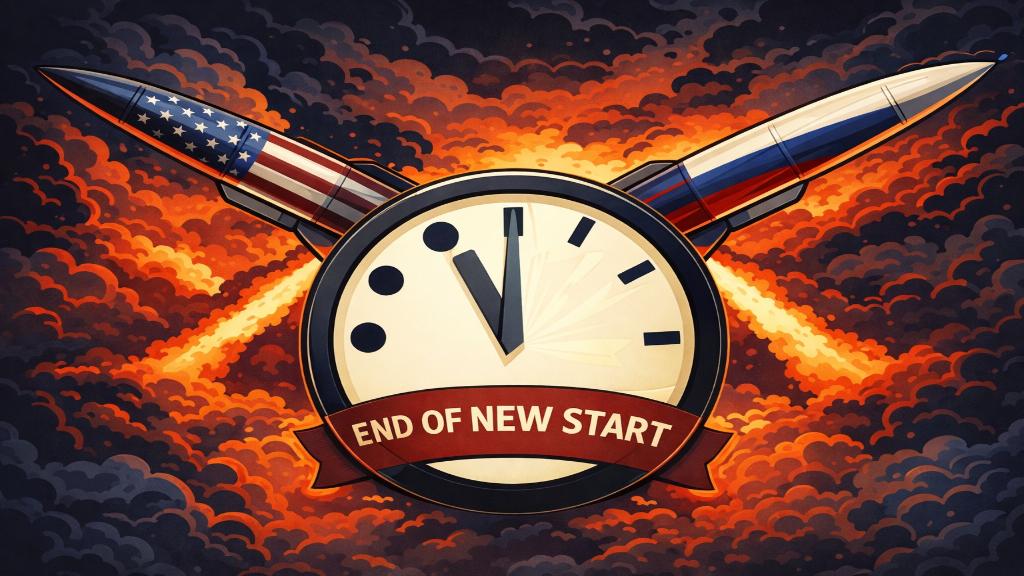
- The New START treaty expires on February 5, 2026, ending bilateral limits on strategic nuclear weapons.
- UN Secretary-General calls it a 'grave moment' for global peace.
- Russia proposes informal observance of limits for one more year, without US agreement.
- Experts differ on implications, some fearing an arms race involving China.
What is the New START treaty and why is it expiring?
Curious how a fifteen-year-old agreement can still stir global chancelleries? New START, signed in 2010 between the US and Russia, capped strategic nuclear arsenals of both superpowers. With its expiration today, February 5, 2026, we enter an era without formal constraints on these formidable weapons. Ironically, while the world celebrates cultural advances like cross-border artistic exchanges, nuclear warheads might proliferate unchecked.
The cultural origins of a geopolitical accord
In a nod to history, this treaty followed Cold War agreements, where mutual fear inspired a form of diplomatic 'theater'. Today, without renewal, narratives diverge: Western sources like NYT highlight a 'rush' to new weapons, while RT emphasizes ongoing negotiations between Washington and Moscow.
International reactions: who says what?
Let's observe these divergences with curiosity. The UN, via António Guterres, expresses neutral concern, calling the event a 'grave moment' for international security, without finger-pointing. Amnesty International and HRW, focused on human rights, have no direct statements, but their past reports on arms underscore risks to civilians.
Differences between Western and Russian media
Western media, such as CNN and NBC, stress fears of an arms race, noting no verifications since 2022 due to the Ukraine war. Ironically, they evoke a 'collapse' of controls, whereas Kommersant in Russia sees it as weakening Russian superpower status, but focuses on European efforts for dialogue. RT reports Russia remains open to talks, countering Western narratives blaming lack of agreement.
Chinese and Middle Eastern perspectives
The South China Morning Post, though quiet, implies China could accelerate its arsenal, viewing the expiration as an opportunity. Al Jazeera takes a neutral tone, linking it to global stability without regional bias. These views contrast with Western alerts on 'strategic instability'.

Are there conflicts of interest in the analyses?
With a touch of irony, note that experts like Matthew Kroenig from the Atlantic Council, funded by Western interests, argue the limits were 'outdated'. Others, affiliated with CSIS or SIPRI, potentially influenced by government funds, warn of escalation. No unconfirmed information is reported; ongoing negotiations remain speculative, as noted by Axios without verified details.
Dubious information to signal
Any mention of an 'imminent deal' remains unconfirmed; sources like Reuters report only Russian proposals without firm US response.
What culture of peace in a treaty-less world?
Curiously, while amateur theater teaches empathy, nuclear geopolitics seems to forget these lessons. Could cultural exchanges inspire new dialogues?
FAQ
What were the New START limits?
The treaty capped 1,550 deployed warheads and 700 launchers.
Is China involved?
Not directly, but Trump aims for a deal including Beijing.
What immediate consequences?
None, but increased risk of escalation without verifications.