
 ezna-io
Deadly Nightclub Fire in Goa: Early Toll and Questions Over Preventable Disaster
By Zoé Marquand
a year ago

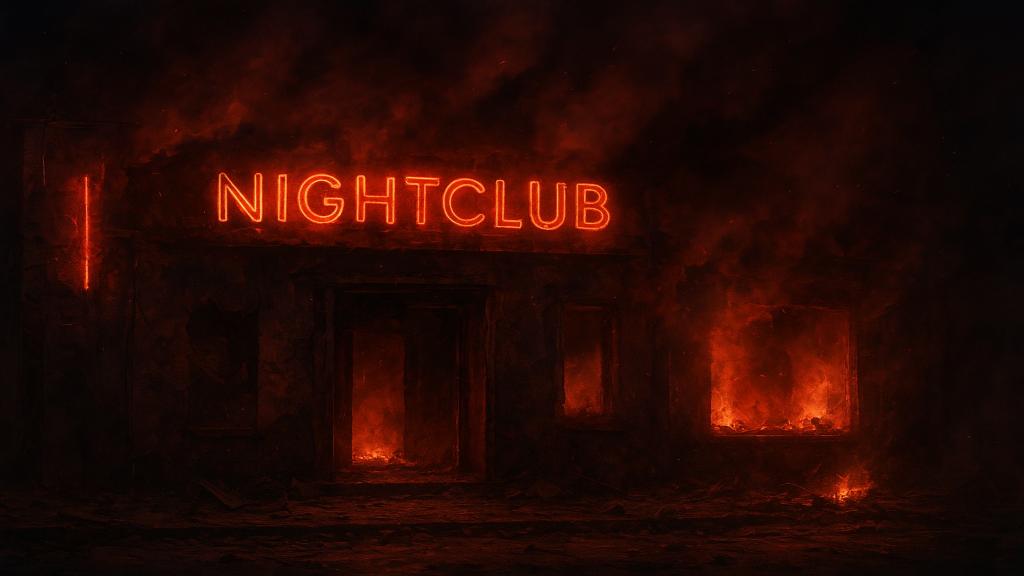
- On the night of December 6 into December 7, a fire ravaged the “Birch by Romeo Lane” nightclub in Arpora, Goa (India), killing at least 25 people.
- The majority of victims were staff — notably kitchen workers — but several tourists (three or four) are also among the casualties.
- An official magisterial inquiry has been launched and government compensation announced for victims’ families and the injured.
- The building reportedly lacked required construction permits, had previously received a demolition order, and had only a narrow entry/exit — all major fire-safety failings.
- The tragedy casts a harsh light on safety regulation in India's nightlife venues and raises serious accountability issues for both operators and state authorities. —
Shortly after midnight, a crowd of around a hundred people danced in the “Birch by Romeo Lane” nightclub in Arpora, Goa. Then a nightmare: a sudden explosion — possibly from a gas cylinder or fireworks, sources vary — followed by fire, smoke and panic. Escape routes were inadequate, exits narrow. What should have been a carefree party turned into a deadly trap.
The human cost is heavy. Officials report 25 dead — including 14 club staff (mostly kitchen personnel) and at least 3–4 tourists. Six others were injured and are now in stable condition.
Authorities have ordered a magisterial inquiry and offered compensation — 200,000 rupees per victim’s family, 50,000 for those injured. The Prime Minister of India expressed deep sorrow.
The real scandal lies in the failure to comply with basic safety norms. The nightclub reportedly lacked official construction permission, despite a prior demolition notice — suspended after appeal. The building had only one narrow exit, severely limiting evacuation and delaying emergency response — fire trucks could only approach 400 metres away.
Witnesses described horror scenes: people rushing to escape, some stumbling backward, others running into the kitchen in panic — a deadly decision as smoke engulfed the area. Many survivors confessed they had no idea the club was such a safety risk. The regulatory oversight, if any, had clearly failed.
Sadly, such tragedies are not unprecedented in India — fires, short-circuits, overcrowding and regulatory neglect have repeatedly caused mass casualties. But when a hotspot of nightlife, popular with tourists, meets a slack system, the outcome can be catastrophic.
For Goa — a top destination for foreign holiday-makers — this disaster could mark a turning point. Beyond mourning, it should force a reckoning: do club owners prioritize profit over safety? Are state inspections effective? And how to guarantee, in festive and tourist venues, the most fundamental right: the right to safety and life?

This tragedy demands lessons: stricter regulation, frequent safety inspections, transparent building permits, staff training, proper emergency exits — and above all, a commitment to human life over tourism or profit.
Sources
- Reuters — India nightclub fire kills 25 in Goa
- Associated Press — A fire at a popular nightclub in India’s Goa state kills 25 people
- The Guardian — Tourists among at least 25 killed in Goa nightclub fire
- Le Monde (English) — In India, a fire at a popular Goa nightclub kills at least 25
- Sky News — At least 25 people dead after major fire at nightclub in Goa, India
- Wikipedia — 2025 Arpora nightclub fire