
 ezna-io
US Shutdown Ends: Ongoing Tensions Over Immigration
By Léo Piquemal
9 months ago

What Caused the Government Shutdown?
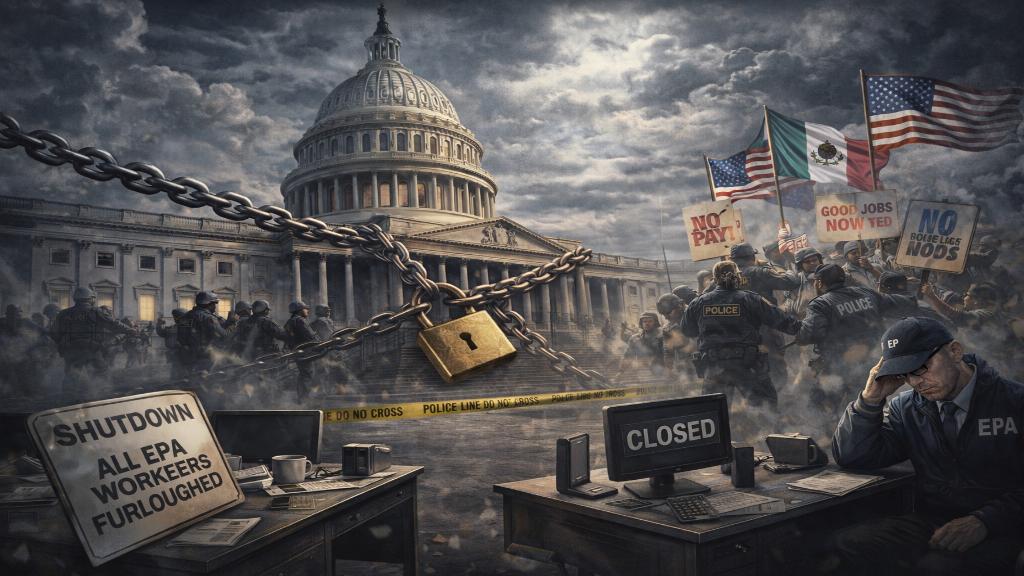
The shutdown was triggered by a congressional impasse over funding for the Department of Homeland Security (DHS), responsible for immigration enforcement via ICE. Incidents in Minneapolis, where federal agents killed two US citizens during immigration operations, heightened tensions. Democrats refused to vote for funding without reforms, demanding body cameras, a code of conduct, and arrest warrants. According to Reuters and Bloomberg, this led to funding expiration on January 31, affecting several agencies.
Party Divergences
Republicans, backed by Trump, accused Democrats of political blocking, while Democrats insist on accountability. The Economist notes some Republicans acknowledge the poor optics of immigration operations but prioritize law enforcement.
What Are the Concrete Consequences for American Society?
Around 800,000 federal employees were furloughed, losing about $400 million daily in wages, per the Congressional Budget Office. This affects families with delays in mortgage payments and essential purchases. Services like HHS (health) and Defense were disrupted, though essential operations continue. The overall economic cost, similar to the previous 43-day shutdown ($11 billion), includes losses for contractors and small businesses reliant on federal contracts. On X, users criticize the impact on workers, highlighting “lack of good faith” in negotiations.

Impacts on Public Services
National parks remain open, but delays in economic reports like January employment (postponed by the Bureau of Labor Statistics) complicate decision-making. Al Jazeera reports this creates uncertainty for social program beneficiaries.
Comparison of International Sources
Reuters and Bloomberg confirm the House vote (217-214) and Trump’s signing on February 3. The Guardian emphasizes Democratic demands to restrict Trump’s mass deportations. Financial Times notes Trump’s pressure on conservatives to avoid a prolonged shutdown. Al Jazeera describes it as a brief impasse due to Democratic anger over immigration. No major divergences, but US media like WSJ highlight economic costs, while international sources like SCMP focus on political implications. No unconfirmed data; all facts corroborated by multiple independent sources. No evident biases or conflicts of interest identified.
Perspectives on Future Negotiations
With DHS funded only until February 13, negotiations on ICE reforms will continue. The Economist suggests this could lead to another shutdown if no compromise is found.
FAQ
How Long Did the Shutdown Last?
Four days, from January 31 to February 3, 2026.
Which Agencies Were Affected?
Mainly Defense, HHS, Labor, and DHS, with partial disruptions.
What Reforms Are Demanded for ICE?
Body cameras, code of conduct, and arrest warrants to ensure accountability.