
 ezna-io
US Strikes in Nigeria: Between Counterterrorism, Rhetoric and Local Realities
By Zoé Marquand
10 months ago

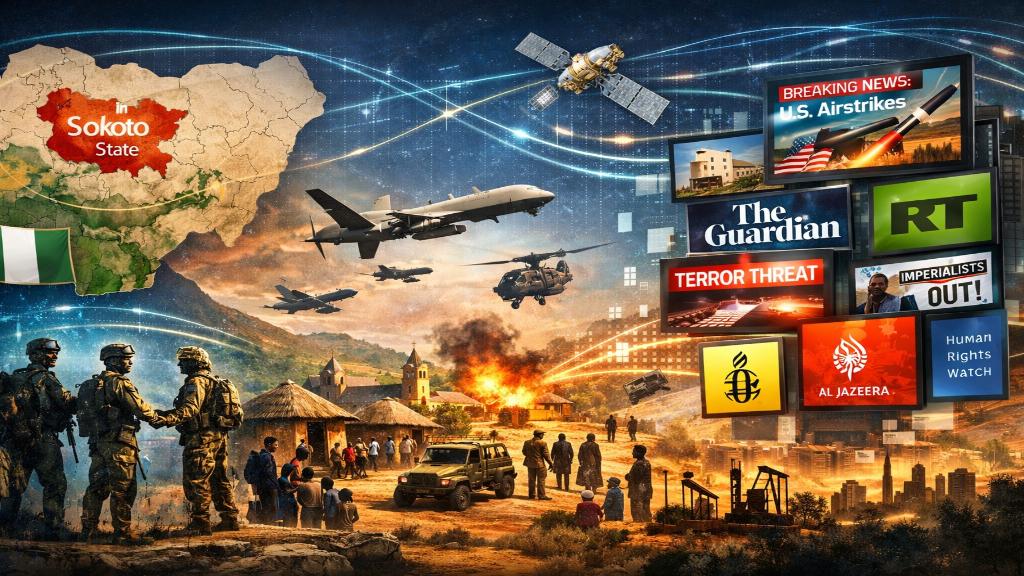
- US airstrikes in northwest Nigeria against Islamic State-linked militants.
- Washington frames strikes as protecting civilians and Christians, a contested narrative.
- Media coverage varies widely across regions with contrasting perspectives.
On the night of December 25–26, 2025, the United States carried out airstrikes against positions of Islamic State-linked militants in Sokoto State, northwest Nigeria, in official coordination with Abuja. The U.S. Africa Command confirmed the operation took place at the request of Nigerian authorities and targeted "terrorist targets" as part of structured security cooperation between the two nations.
President Donald Trump stated the strikes were aimed at militants accused of "targeting and killing primarily innocent Christians," and suggested further strikes would follow if such violence persisted. This narrative of protecting Christians has been emphasized in some Western outlets, framing the operation within a broader counterterrorism justification.

However, Nigerian officials have warned against a unilateral interpretation of the strikes, emphasizing that violence affects multiple communities regardless of religion, and stressing that the action was rooted in security cooperation rather than religious motives.
On-the-ground reports from residents in Jabo village indicate that the strikes surprised locals and caused fear and uncertainty, as there was no clear evidence of militants’ presence beforehand. Independent verification of targets and outcomes remains limited, raising questions and skepticism among observers.
Western media outlets have broadly disseminated official U.S. statements, often highlighting the protection narrative, though more critical Western voices remind readers of Nigeria’s complex security challenges involving Boko Haram and ISWAP among others.
African and Middle Eastern coverage tends to focus on internal Nigerian dynamics and international cooperation, while narratives from Russian-aligned outlets generally criticize unilateral U.S. military interventions abroad as lacking clear multilateral mandates, despite limited direct reporting on this specific event.
Critical reactions include voices describing the operation as undermining Nigeria’s sovereignty and labelling it imperialist, calling for non-military assistance approaches.
These contrasting narratives illustrate how global media treatment of the same event can vary, with some emphasizing official rationales, others contextual complexities, and still others geopolitical critiques.