
 ezna-io
Gaza Under Storm Byron: Rain, Ruin, and Divergent Narratives
By Zoé Marquand
10 months ago

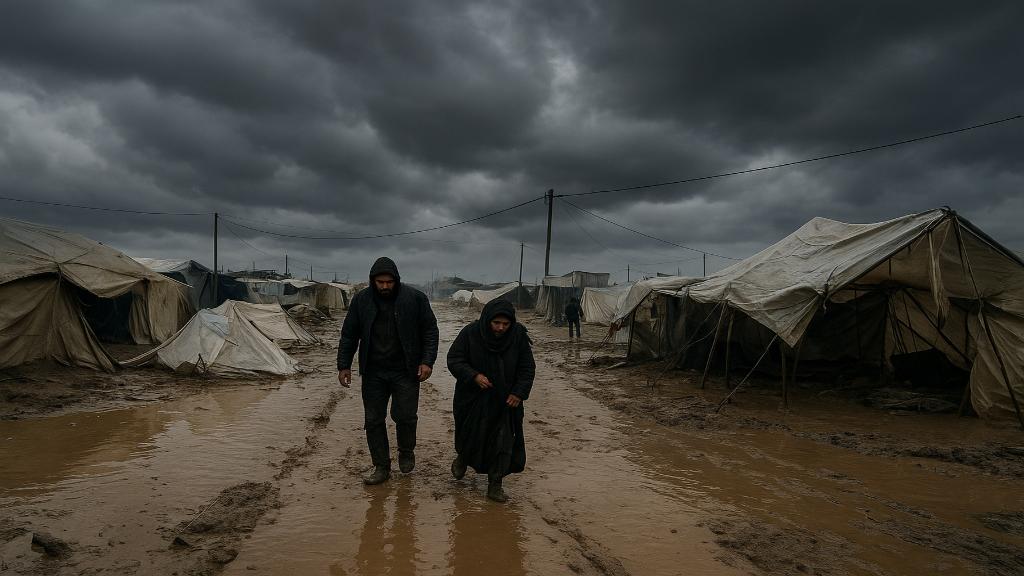
- Storm Byron devastates Gaza, at least 14 dead, including children.
- Humanitarian conditions worsened by destroyed infrastructure and limited aid.
- Significant divergences in coverage across Western, Middle Eastern, and other outlets.
Just when a fragile ceasefire seemed to offer a breath of relief after more than two years of conflict between Israeli forces and authorities in the Gaza Strip, nature — embodied in Storm Byron — struck with tragic force. According to Al Jazeera, at least 14 Palestinians, including children, have died in the past 24 hours due to torrential rain, floods, and freezing conditions causing makeshift shelters and already weakened structures to collapse.
Descriptions of the destruction vary: Reuters reports flooded tents, thousands of emergency calls, and an infant dying of hypothermia in a displaced persons camp. Buildings already heavily damaged by conflict could not withstand the heavy precipitation and winds, underscoring that the storm is not merely a climatic event but worsened by years of infrastructure destruction.
Western media like Reuters frame the crisis as a severe humanitarian disaster, noting shared responsibility between natural forces and the enduring conflict. Spanish outlet El Pais emphasizes the impact of the blockade and restricted aid access, sometimes framing these as obstacles to protecting vulnerable populations.
Middle Eastern outlets such as Al Jazeera focus intensely on civilians’ daily suffering and how minimal resources have been exhausted, frequently adopting terminology that conveys an ‘‘extreme’’ humanitarian crisis rather than simply a weather calamity. This contrasts with Western outlets’ more ‘‘neutral’’ tones but highlights the local voices often under-represented in broader global coverage.
At this time, Russian or Chinese outlets have not published major reporting on Storm Byron’s specifics in Gaza — a gap that in itself illustrates differing news agendas across regions. Regarding international organizations, the World Health Organization has warned for some time about the risk of outbreaks due to unsanitary, cold, and overcrowded conditions, especially where healthcare systems are destroyed. (No specific WHO/UN figures for the last 24 hours are currently available.)
There is no credible indication so far that particular NGOs or experts funded by states or corporations are driving biased narratives specifically about this storm; most NGOs cited focus on urgent aid and criticism of barriers to assistance.

The impact of Byron extends beyond a mere weather event: it starkly exposes the structural vulnerabilities of a region already devastated by prolonged conflict and the uneven media coverage shaped by geopolitical lenses. While some Western sources highlight humanitarian urgency, Middle Eastern publications resonate deeply with the lived suffering of local populations. This plural narrative urges readers to distinguish established facts from varied interpretations — and to be alert to whose voices are absent or reduced in international discourse.