
 ezna-io
France’s Budget Deadlock: Special Law Passed to Avert Government Blockage
10 months ago

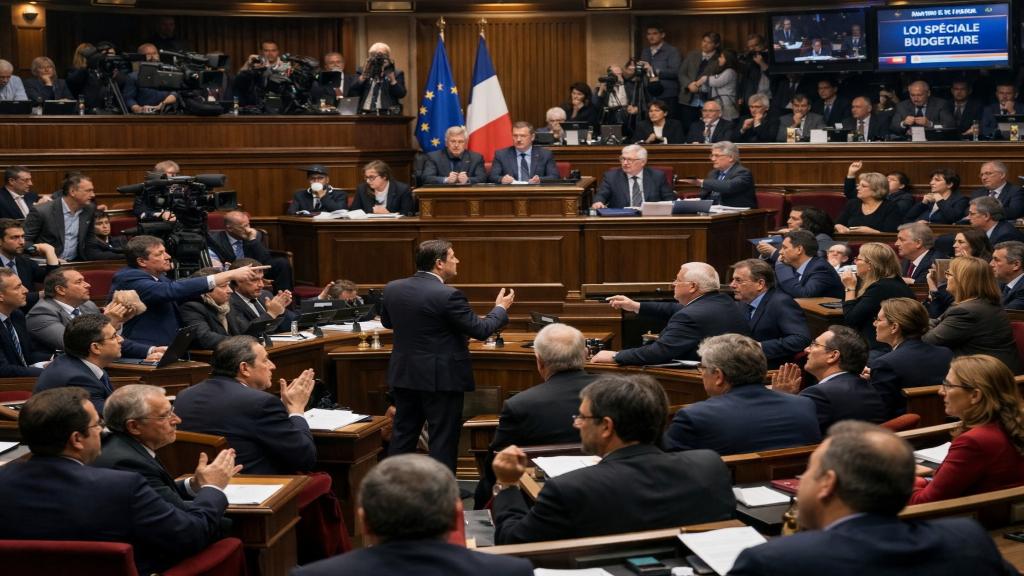
- The French Parliament passed a special emergency law to fund the state into early 2026 in the absence of an adopted 2026 budget.
- The law prevents new investments and planned fiscal reforms from taking effect.
- The budget impasse highlights deep political division in Parliament.
On 23 December 2025, both the National Assembly and the Senate adopted an emergency ‘special law’ to ensure the French State continues to function into January 2026 despite failing to pass a formal budget, according to parliamentary reports and journalistic accounts.
This legislative measure, unanimously supported amid failed budget negotiations between deputies and senators, essentially extends the 2025 budget framework, allowing tax collection and debt issuance until a complete budget is agreed early in 2026.
Mainstream outlets like Reuters and the Associated Press emphasize the institutional seriousness of the deadlock: a fragmented Parliament since the 2024 elections means no political group holds a stable majority to pass comprehensive fiscal legislation.
However, narratives differ on political responsibility. Some critics in French media stress coordination failures between the National Assembly and Senate and an inability to reach compromise on fiscal priorities.

On social networks (X, Reddit), commentary often frames the issue as structural political dysfunction, with threads criticizing traditional parties and repeatedly highlighting instability—as opposed to institutional reporting focusing on procedural explanations. (Social media information here is representative rather than individually verified.)
A notable divergence in discourse is whether the use of a ‘special law’ is seen as a legally appropriate tool or as symptomatic of deeper democratic dysfunction. Official sources argue it’s a lawful mechanism under existing budget laws, while some commentators describe it as indicative of governance fatigue.
Despite online speculation, there is no verified evidence of direct conflicts of interest, such as undisclosed lobby influence, affecting the adoption of the special law: parliamentary debates and votes are public records.