
 ezna-io
US and Europe inflation March 2026: persistent pressure
By Léo Piquemal
7 months ago

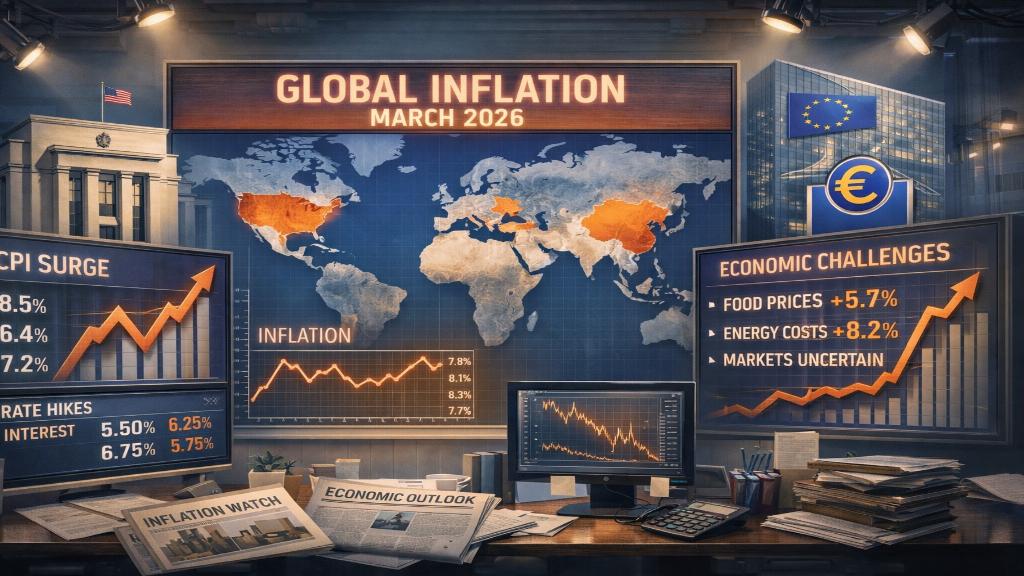
In mid-March 2026, several economic releases confirmed that inflation remains a central issue for major economies. According to data published on March 12, 2026 by the Bureau of Labor Statistics, annual inflation in the United States stands at 3.2%, above the Federal Reserve's 2% target. At the same time, core inflation remains elevated at 3.8%, signaling persistent pressure in services.
In Europe, Eurostat published an estimate on March 14, 2026 confirming annual inflation of 2.6% in the eurozone, with notable differences: Germany stands at 2.9%, while France remains at 2.3%. The European Central Bank says inflation is declining more slowly than expected, especially because of wages and services.
According to Reuters, markets reacted negatively to these figures, with investors pushing back expectations for rate cuts. US 10-year Treasury yields moved above 4.3%, reflecting a reassessment of inflation risk. Bloomberg also reported a pullback in equity markets, especially in rate-sensitive sectors such as technology.
In Asia, the picture is different. According to the South China Morning Post, China is experiencing inflation close to 0%, with persistent deflationary pressure in real estate and consumption. This divergence is widening global imbalances and influencing capital flows, as some investors turn to emerging markets in search of yield.
The Financial Times notes that these divergences are complicating international monetary coordination. While the Fed maintains a restrictive stance, some Asian economies are considering stimulus measures to support growth.

The real-world impact on households is visible. In the United States, mortgage rates remain around 6.8%, limiting access to home ownership. In Europe, mortgage lending remains constrained, with loan volumes down by about 15% year on year according to Banque de France.
For companies, high financing costs are slowing investment. SMEs are especially exposed, particularly in industry and construction.
Some information remains uncertain. According to an unverified source cited by Bloomberg Markets, the Fed may be considering only one or two rate cuts in 2026, down from three previously expected. That has not been officially confirmed.
An analysis of the sources shows few conflicts of interest, but clear differences in emphasis. Western media focus on monetary policy, while Asian outlets place more emphasis on growth and social stability.
In the short term, the path of inflation will depend on wages, energy prices, and overall demand. Central bank decisions in the coming weeks will be decisive for financial markets and for household economic conditions.
FAQ
Is inflation falling?
Yes, but more slowly than expected in Western economies.
Why are markets volatile?
Because expectations for rate cuts are being pushed back.
What is the impact on households?
More expensive borrowing and continued pressure on purchasing power.
- Reuters - US inflation data March 2026
- Bloomberg - US inflation Fed outlook
- Financial Times - Central banks inflation analysis
- SCMP - China inflation trends
- Les Echos - Eurozone inflation March 2026
To continue reading on Nezna, here are two related articles connected to inflation pressure and the role of energy prices in recent market moves: