
 ezna-io
China’s Growing Pressure on Europe: Why France Is at the Center of the Strategic Game
a year ago

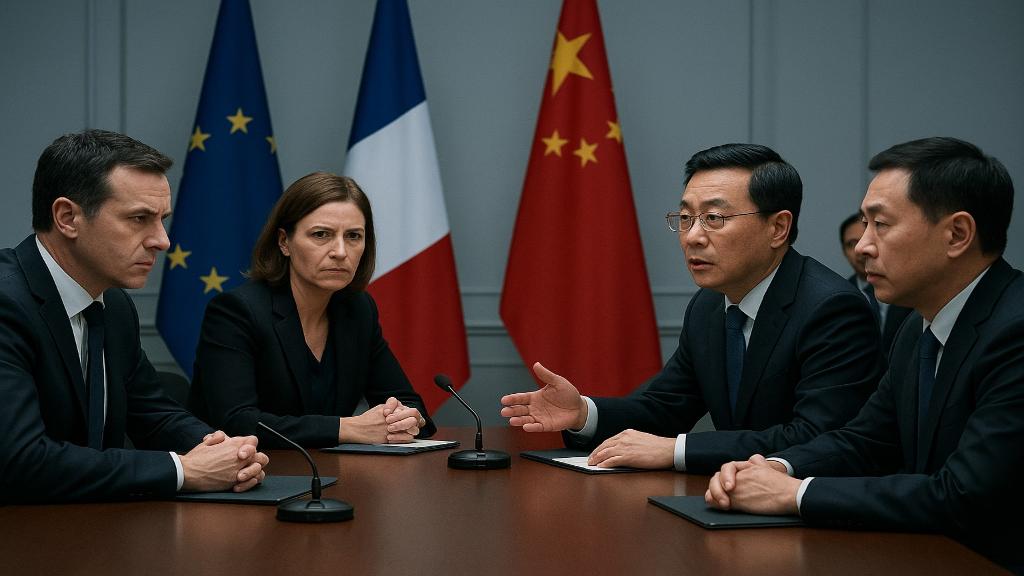
- Beijing urges Paris to facilitate closer China-EU relations.
- EU positions remain divided between economic cooperation and strategic caution.
- Media narratives show strong discrepancies in tone and framing.
- No proven conflicts of interest, but some grey zones remain.
A recent statement by a senior Chinese diplomat calling on France to “promote the healthy development of China-EU relations” has reignited a major strategic debate within Europe. Reported by outlets such as Le Monde and CGTN, this diplomatic push forms part of a broader effort by Beijing to strengthen ties with Europe through targeted bilateral exchanges.
Chinese messaging highlights economic complementarity, multilateralism and the vision of a mutually beneficial partnership. Media such as the Global Times frequently promote this narrative, emphasizing industrial cooperation and technological synergy. Meanwhile, EU institutions and several European news outlets underscore lingering concerns about China’s status as a “systemic rival.” Reports from the French National Assembly reflect this duality, showing a Europe torn between economic necessity and strategic vigilance.

This gap between Chinese diplomatic optimism and European caution produces a climate of strategic ambiguity. While economic exchanges with China remain essential for the EU, issues such as industrial dependence, subsidies and market access continue to generate concern. Media including Le Monde highlight the increasing divergence among EU member states, with Germany and Nordic countries adopting a more cautious posture, and France appearing more open to acting as mediator.
Social media discussions reflect this polarization: some users call for stronger European autonomy, while others advocate pragmatic cooperation with China. As of now, no public evidence indicates direct Chinese funding of European lawmakers in connection with this diplomatic push. Still, uncertainties remain regarding the influence of certain think tanks promoting a particularly favorable view of China-EU cooperation.
Ultimately, China’s diplomatic pressure positions France at the heart of a delicate balance between economic cooperation and strategic prudence. The stance Paris adopts in the coming months will help define the future of China-EU relations and Europe’s long-term strategic autonomy.