
 ezna-io
China Rushes for Nvidia H200 Chips to Accelerate AI Despite US Restrictions
10 months ago

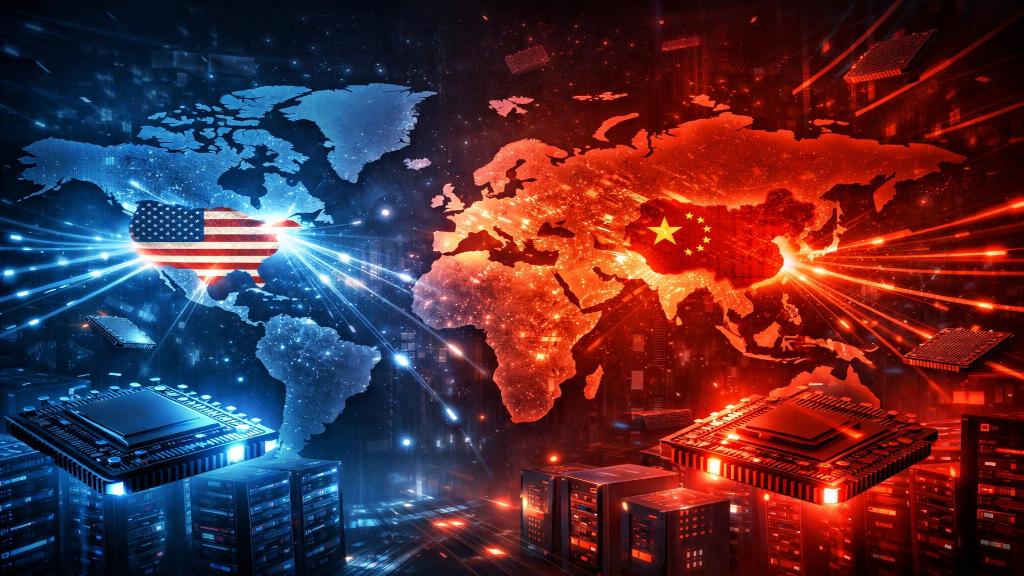
- Explosive Chinese demand for over 2 million Nvidia H200 chips in 2026.
- ByteDance (TikTok) plans to spend around 100 billion yuan ($14 billion USD).
- Nvidia ramping up production via TSMC despite US restrictions on advanced chips.
- H200 represents a significant upgrade for AI in China.
- This rush illustrates geopolitical tensions in AI technologies.
A Record Chinese Demand for Nvidia's AI Chips
In late December 2025, sources revealed that Chinese tech companies have placed orders for over 2 million Nvidia H200 chips for 2026. Nvidia, facing demand far exceeding current stock (around 700,000 units), has approached TSMC to boost production starting in Q2 2026.
Key player ByteDance, parent of TikTok, is reportedly planning a 100 billion yuan budget (about $14 billion) for Nvidia chips in 2026, up from 85 billion in 2025. These figures highlight the voracious appetite of Chinese giants for AI inference capabilities.
What is the H200 Chip and Why is it Coveted?
The H200 is an upgraded version of the H100, optimized for inference – the phase where a trained AI model responds to queries. It offers better energy efficiency and performance compared to chips available in China under embargo (advanced Blackwell are banned). For Chinese firms, the H200 is a major upgrade, accelerating deployment of large national AI models.
Geopolitical Context
US restrictions limit exports of cutting-edge tech to China for national security reasons. Yet the H200 remains allowed, creating an opportunity window. Nvidia adapts its strategy to maintain presence in this crucial market.

Contrasting Media Coverage
Western media (Reuters, NYT) emphasize geopolitical tensions and risk of an AI bubble, describing a 'computational arms race'. Reuters highlights the buying frenzy despite sanctions. South China Morning Post, more neutral, reports ByteDance figures without strong criticism, stressing Chinese resilience.
No specific Russian or European coverage in the last 24 hours, but outlets like Bloomberg Tech relay Reuters info. On social media (X/Twitter), discussions focus on sanction hypocrisy and China's applied AI advance, with tones varying by geopolitical leanings.
Societal Utility: Promises and Limits of This Acceleration
This rush undeniably speeds AI innovation: better models for medical research, logistics optimization, or translation. However, it raises critical questions. Does concentrating computing power among giants reinforce inequalities? Does massive data center energy consumption usefully advance human progress or mainly fuel surveillance and economic competition?
Finally, persistent dependence on Nvidia, even for 'allowed' chips, questions China's true tech sovereignty and long-term effectiveness of US restrictions.
Outlook for 2026
If production follows, 2026 could mark a leap for Chinese AI. But regulatory changes remain unpredictable, and exact volumes are confirmed only via anonymous sources relayed by multiple independent media.