
 ezna-io
Macron in London for Zelensky: Symbolic Diplomacy and the Politics Behind the Visit
By Hugo Delorme
a year ago

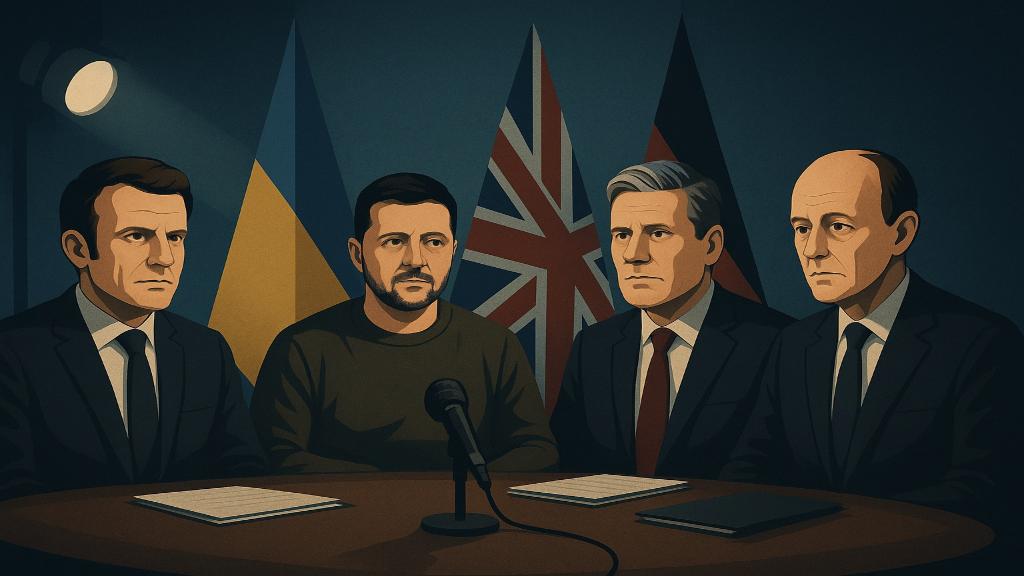
- Emmanuel Macron will travel to London on Monday to meet Volodymyr Zelensky, Keir Starmer and Friedrich Merz to "take stock" of negotiations under US mediation.
- The meeting is part of the "Coalition of the Willing" format co-chaired by Macron and Starmer since autumn.
- European outlets emphasize protecting Ukraine’s decision-making; some Anglo-Saxon media focus on controversial US envoys and proposals.
- Social media reactions range from diplomatic support to fears of concessions and a dose of meme-driven irony.
When high diplomacy looks a bit like a red-carpet affair — formal handshakes, coordinated photo ops, carefully timed departures — it's worth recalling that heavy matters sit behind the cameras: security guarantees, borders, and the awkward question of who writes the footnote. That is precisely the stage set by the French president's post on X: he will travel to London on Monday to meet Zelensky, Starmer and Merz to "take stock" of US-mediated talks.
Agency reporting and mainstream outlets agree on the skeleton of the story: the announcement originates from Paris and has been relayed by Reuters, AFP and major European newspapers — Le Monde frames it in domestic terms, The Guardian stresses the "US-backed" nature of the draft plan, and the UK government has posted official confirmation of the consultations.
A rehearsed format. Since autumn, Macron and Starmer have been co-chairing a so-called "Coalition of the Willing" aimed at designing security guarantees and a potential peacekeeping layer for Ukraine. The London trip is therefore less a bolt from the blue than a continuation of that cooperative framework.
Different editorial lenses. French coverage tends to underline European agency and France’s leadership role in supporting Kyiv. Anglo-Saxon outlets, by contrast, call attention to the role of US envoys and to controversies over early drafts of peace proposals that critics say may have been tilted toward Russian demands — a theme explored by The Guardian and other international commentators.
Social media snapshot. Official posts from the Presidency and Downing Street propagated the news; public timelines show a mix of solidarity messages, sceptical threads warning against externally imposed deals, and the usual political satire. The immediate social feed therefore amplifies both support and suspicion.

International parallels. The Macron-Starmer-Zelensky axis recalls broader European attempts to build an independent diplomatic posture amid heavy US engagement. Other regions have seen similar dynamics: regional coalitions seeking a degree of ownership of peace processes while outside powers propose frameworks. The Anglo-European debate shows that the question of who leads the writing of any agreement remains political as much as technical.
Gaps in reporting. Most articles focus on political and security stakes; few of the major outlets we consulted today present verified investigations into direct financial links between national leaders and defense industry actors specifically tied to this London meeting. Absence of reporting is not proof of absence, but current public reporting by AFP, Reuters, Le Monde and the UK government does not supply such links.
Fragile or unconfirmed threads. Mentions of US envoys (Steve Witkoff, Jared Kushner) and disputed early drafts have circulated in anglophone media and analysis pieces; they deserve caution until full texts or official communiqués are published. Several outlets raise the issue, but specific clauses and alleged concessions require corroboration by primary documents.
Why France cares. For Paris, the meeting is about credibility and European leadership as much as about Ukraine’s immediate security: ensuring a future settlement is not perceived as an externally dictated bargain is key to European cohesion. Macron's visit is thus a synchronising move aimed at demonstrating a united European front.
Final note. Diplomacy likes choreography; reporters like drama. The true test will be the small print — the communiqués, the guarantees, the timelines. Until those documents are public and read line by line, the public theatre will remain a mixture of signal and stagecraft.
- Reuters – France's Macron to meet Zelenskiy, Starmer and Merz in London (announcement of trip).
- The Guardian – Zelenskyy to meet Starmer at Downing Street (context and US-draft concerns).
- AFP – dispatches and summaries of official announcements.
- Le Monde – French perspective and national framing.
- UK Government – official communiqués on consultations and Coalition of the Willing.
- Élysée – background on the "Coalition of the Willing" format.
- Al Jazeera – recent diplomatic context in Europe.