
 ezna-io
Art Market 2026: Figurative Painting Takes Hold
7 months ago

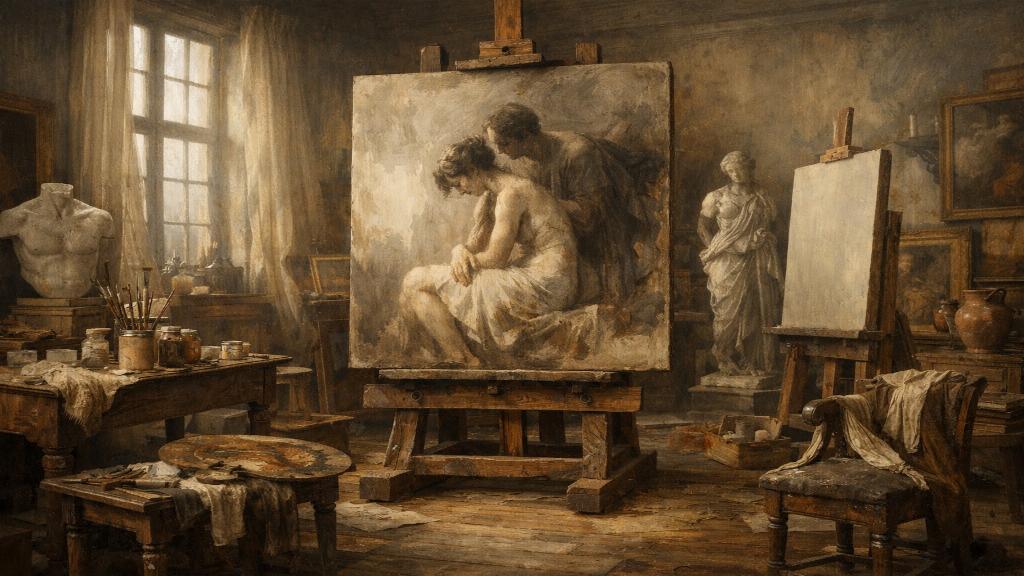
- The 2026 Art Basel and UBS report confirms a modest return to growth in the global art market.
- Within that context, painting and materially grounded works retain strong visibility across fairs and institutions.
- Paris, Hong Kong and major museums help reinforce this renewed attention to legible and embodied forms.
- The shift remains partly market-driven, but it also reflects a reaction against digital saturation.
In early 2026, several signals point in the same direction: figurative painting is becoming increasingly visible within an art market that has turned slightly positive again, while also benefiting from supportive museum programming. Fairs, institutions and sector analyses do not describe the phenomenon in exactly the same way, but they all point toward a renewed valuation of material, legible and historically grounded works.
The strongest confirmation comes from the 2026 Art Basel and UBS global art market report. Clare McAndrew, founder of Arts Economics, states: 'The market welcomed a shift in direction in 2025, from the contraction of previous years to modest growth.' French translation: 'Le marché a accueilli favorablement un changement de direction en 2025, passant de la contraction des années précédentes à une croissance modeste.' The quote does not refer exclusively to figurative painting, but it does confirm a recovery framework in which the most tangible and easily identifiable segments regain weight.
This overall improvement does not by itself explain the growing prominence of figuration. It does, however, create favorable conditions for works that combine material presence, technical continuity and immediate legibility. In international fairs as in major exhibitions, painting therefore continues to play a central role, both as a market object and as the basis for a stable visual experience in an environment saturated with digital images.
In Paris, the same dynamic is visible on the institutional side. The Matisse 1941-1954 exhibition at the Grand Palais, recently highlighted by Nezna, emphasizes continuity between painting, cut-out and color, rejecting the idea of a break between pictorial tradition and formal invention. Meanwhile, the Renoir exhibition at the Musee d'Orsay places beauty, light and the figure back within a long history of pictorial modernity. In an older register, the presentation of the restored Triptych of Moulins at the Louvre recalls that figurative excellence belongs to a historical depth that extends far beyond contemporary debates alone.

Comparing the sources helps refine the analysis. Economic and institutional sources first describe a market recovery, stronger buyer confidence and renewed focus on high-quality works. Museum and cultural sources place more emphasis on historical coherence, transmission of skills and the persistence of figurative vision. These two readings do not contradict each other. Rather, they show that the same movement can be sustained at once by market logics and by a broader cultural demand.
It is however important to nuance this interpretation. Several segments of contemporary art, particularly conceptual installations and digital practices, continue to benefit from strong institutional and critical visibility. According to recent market analyses, these forms still represent a significant share of exhibitions and public acquisitions. The renewed interest in figurative painting therefore does not imply a uniform decline of other practices, but rather a diversification of attractive poles within the artistic field.
Some elements remain uncertain. According to professional observations that have not been consolidated publicly, some galleries may be increasing the presence of figurative works in order to secure sales in an international environment that remains volatile. This hypothesis is plausible, but it is not decisively demonstrated by the open sources reviewed here.
In terms of bias, the Art Basel and UBS report comes from a major market actor and naturally highlights recovery dynamics. Cultural institutions, for their part, tend to present their exhibitions in a favorable light. No hidden conflict of interest is visible here, but these editorial frameworks should be kept in mind. Even so, the convergence of market data, museum programming and critical reception suggests that this is more than a rhetorical effect.
Ultimately, the rise of figurative painting in 2026 does not mean other practices are disappearing. It points instead to a reordering of aesthetic priorities, in which materiality, technique, the presence of motif and historical continuity regain stronger value. In a cultural landscape dominated by speed, digital circulation and unstable imagery, this renewed attention to the painting as a durable object appears less like nostalgia than a form of rebalancing.
FAQ
Does the Art Basel quote speak directly about figurative painting?
No. It primarily describes the market recovery in 2025, but it provides a solid framework for understanding renewed interest in material and legible segments.
Why connect the market with artistic heritage?
Because the current visibility of figurative painting depends both on sales and fairs, and on institutions that place these works back into historical continuity.
Can this be called a lasting return?
The signals are convergent, but part of the movement still depends on market choices and will need to be confirmed over time.