
 ezna-io
Russian Proposal to France on the Vinatier Case: Cross-Perspectives and Global Echoes
By Hugo Delorme
10 months ago

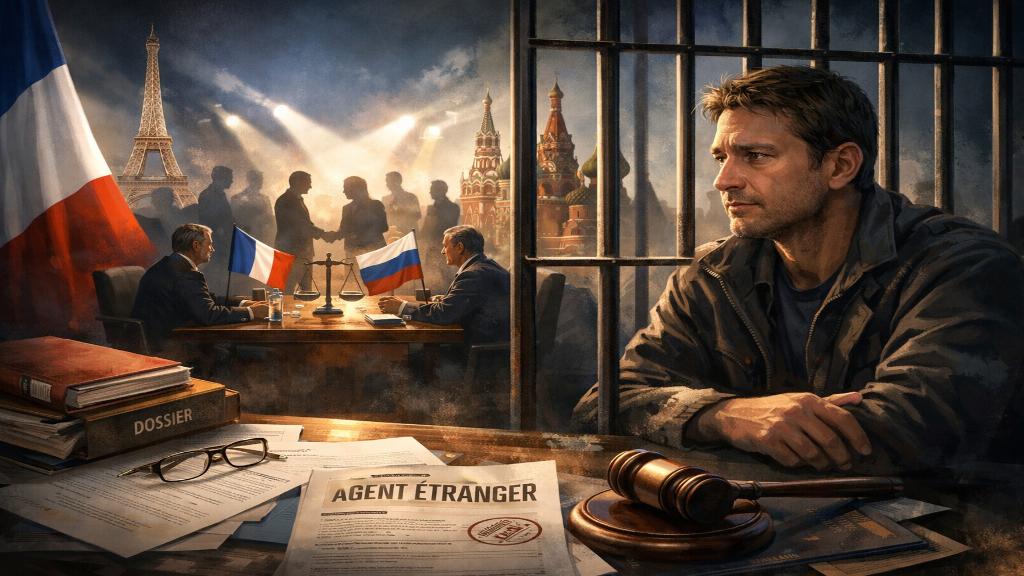
- Russia says it made a proposal to France over the case of French researcher Laurent Vinatier, imprisoned in Russia.
- Vinatier is serving a three-year sentence under Russia’s foreign agent law and now faces additional espionage charges.
- International media frame the case in the broader context of diplomatic tensions and legal frameworks affecting foreign nationals.
The Kremlin recently stated it had made a diplomatic offer to France concerning Laurent Vinatier, a French researcher detained in Russia since June 2024 for failing to comply with laws governing “foreign agents”. Paris has not publicly disclosed what the proposal entails, leaving room for speculation from exchanges of prisoners to broader diplomatic negotiations.
Vinatier, an expert in international relations and post-Soviet studies, was sentenced to three years in prison under Russian law and has since been hit with further espionage charges that could dramatically increase his potential sentence.
The French government describes his detention as arbitrary and calls for his release. President Emmanuel Macron has denied that Vinatier was working for the French state and suggested the case has been framed within Russian disinformation narratives.
Comparatively, many countries have legislation requiring the registration of foreign agents or similar designations. In the United States, the Foreign Agents Registration Act (FARA) requires disclosure of certain activities for foreign interests, but prosecutions and penalties tend to be far less severe than under Russian law, illustrating differences in legal culture and geopolitical usage of such statutes.
International outlets offer varying angles: Reuters and AFP emphasize the diplomatic and bilateral strain, while coverage in outlets like The Straits Times and Arab News connects the issue to wider Western-Russia tensions, noting how arrests of foreign nationals have been used as leverage in broader geopolitical standoffs.
Social media reactions reflect these divergent frames, with some voices treating the situation as another chapter in great-power contention and others cautioning against treating individual legal cases as merely geopolitical pawns.

Factually, no detailed content of the “proposal” has been independently verified beyond official statements by the Kremlin and commentary from Russian and French officials. This absence of detail means that many interpretations are speculative, underscoring the importance of distinguishing confirmed facts from broader analysis.
Looking globally, other nations’ approaches to similar legal frameworks show variance. For instance, foreign agent laws have been criticized in some contexts for suppressing civil society or academic freedom, but differences in how such laws are enforced and the judicial safeguards available can vary widely from one country to another.