
 ezna-io
Russia’s Proposal on Laurent Vinatier: Diplomacy, Perceptions and Paradoxes
By Hugo Delorme
10 months ago

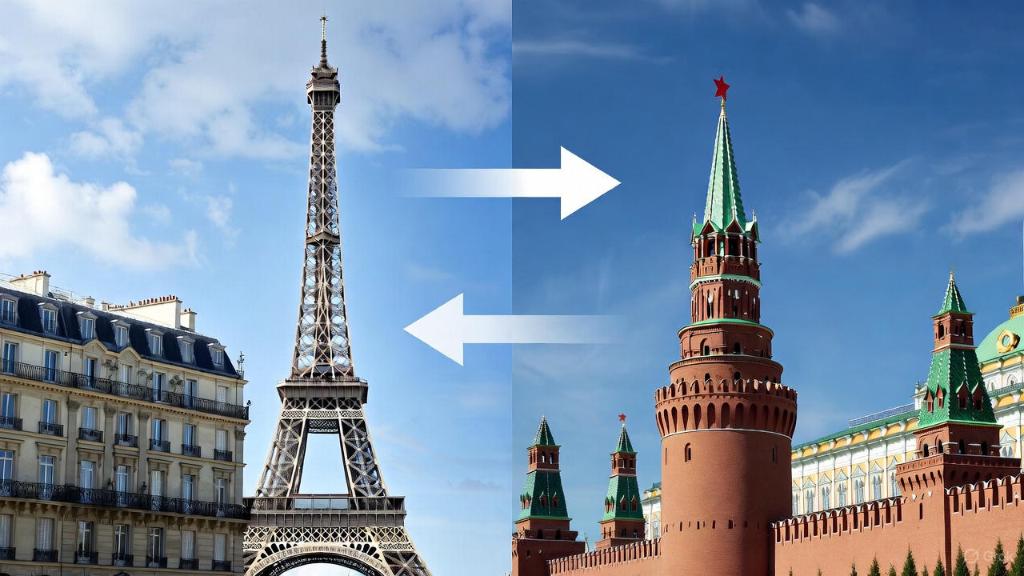
- The Kremlin says it has made a proposal to France regarding French researcher Laurent Vinatier.
- France calls his detention arbitrary; Russia speaks of ongoing contacts.
- The case occurs amid strained Franco-Russian relations.
- Social media shows widely different narratives across languages.
On Thursday, multiple international outlets and news agencies (Reuters/AFP, Anadolu, SCMP) reported that the Kremlin announced making a “proposal” to France on the case of Laurent Vinatier, a French researcher detained in Russia since June 2024. Moscow said “the ball is now in France’s court.”
Kremlin spokesman Dmitry Peskov said there have been “appropriate contacts” between Russian and French officials on the matter, without detailing the substance of the proposed offer.
Vinatier was sentenced to three years in prison in October 2024 for failing to register as a “foreign agent” under Russian law, a designation criticized by rights groups.
Recent reports also indicate he faces additional espionage charges that could significantly increase his possible sentence.
French authorities have labeled his detention “arbitrary” and called for his release. President Emmanuel Macron denied Vinatier had worked for the French government, and his family has rejected the espionage allegations as unfounded and tied to diplomatic tensions.
This echoes other international cases where Western nationals were detained amid geopolitical tensions (e.g., U.S.–Iran, U.K.–China), illustrating how individual cases can become diplomatic leverage. Unlike those, no detailed text of the Russian “proposal” has been publicly released, limiting analysis to verified reporting.

On social media, commentary diverges sharply across audiences. Francophone users largely criticize what they see as political instrumentalization of Vinatier’s detention, arguing he was not involved in official state work. English- and Russian-language commentators emphasize strict local law enforcement. These differences reflect distinct framing rather than contradictions of the core facts reported by credible news outlets.
France has dealt with other cases involving nationals detained abroad by non-Western states, often through discreet diplomacy or prisoner exchanges, though each situation has its own legal and political context.
No confirmed financial or political influence links tied to this affair have been verified by multiple reliable sources as of this writing.