
 ezna-io
Baidu robotaxis outage exposes urban systemic risk
7 months ago

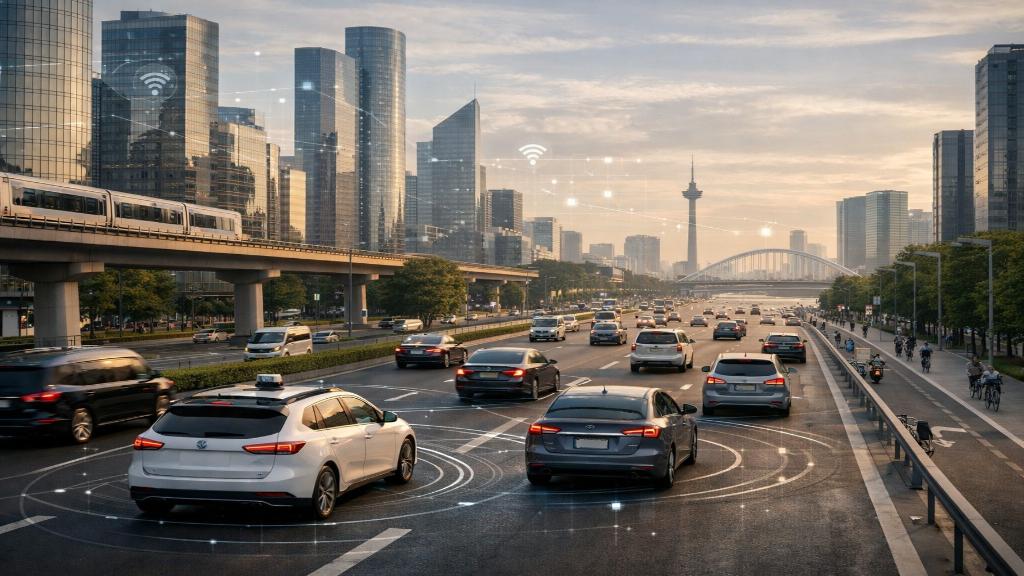
- Over 100 robotaxis stalled simultaneously in Wuhan
- 3.4 million autonomous rides in one quarter
- More than 20 million total rides
- A local failure became a city-scale disruption
In late March 2026, more than 100 Baidu Apollo Go robotaxis stopped simultaneously in Wuhan. Reuters reported a 'system failure'. No injuries were reported, but the disruption affected city traffic.
The key fact is not the failure. It is the synchronization.
One vehicle failing is an incident. A fleet stopping is an urban event.
The Guardian reported 'Driving system malfunction' messages, with one passenger stranded for 90 minutes. A software issue became a real-world safety situation.
An industry already at scale
Baidu reported 3.4 million driverless rides in Q4 2025 and over 20 million total rides by February 2026.
At this scale, autonomy is no longer a demo. It is infrastructure.
And infrastructure is defined by how it fails.
When failure becomes systemic
In connected systems, failure spreads.
The cause remains unknown. But the mechanism is clear: a shared logic produces a shared outcome.
An autonomous fleet does not fail individually. It stops together.
The Wall Street Journal notes that 'consumer acceptance remains a major hurdle'. Trust depends on failure behavior.

Paris as a relevant extension
This logic applies beyond Wuhan. Paris has explored flying taxis and autonomous river shuttles.
Reuters reported that air taxi plans for the 2024 Olympics were scrapped due to certification delays. River mobility projects remained experimental.
This reveals a pattern: demonstration often precedes robustness.
If deployed at scale, multiple transport layers could depend on similar digital infrastructure.
Failure would no longer be local. It would be multi-layered.
An architecture problem
The issue is not the vehicle, but the system.
Robust systems require redundancy, degraded modes and partial independence.
Without this, performance becomes fragility.
The question is no longer whether vehicles can drive. It is whether systems can fail safely.
Uncertainty
The root cause remains unknown. Paris projects remain fragmented and uncertain.
But one trend is clear: increasing dependence on interconnected digital infrastructure.
Conclusion
Autonomy does not remove risk. It reshapes it.
In connected systems, failure becomes collective.
The key question is systemic resilience.
FAQ
What happened in Wuhan?
Over 100 robotaxis stopped simultaneously due to a system failure.
Why does it matter?
Because synchronized failure turns a technical issue into a city-scale disruption.
Why mention Paris?
Because similar risks could apply across multiple autonomous transport systems.