
 ezna-io
SoFiUSD Stablecoin by a US National Bank: Innovation or Reinvention of Banking Infrastructure?
10 months ago

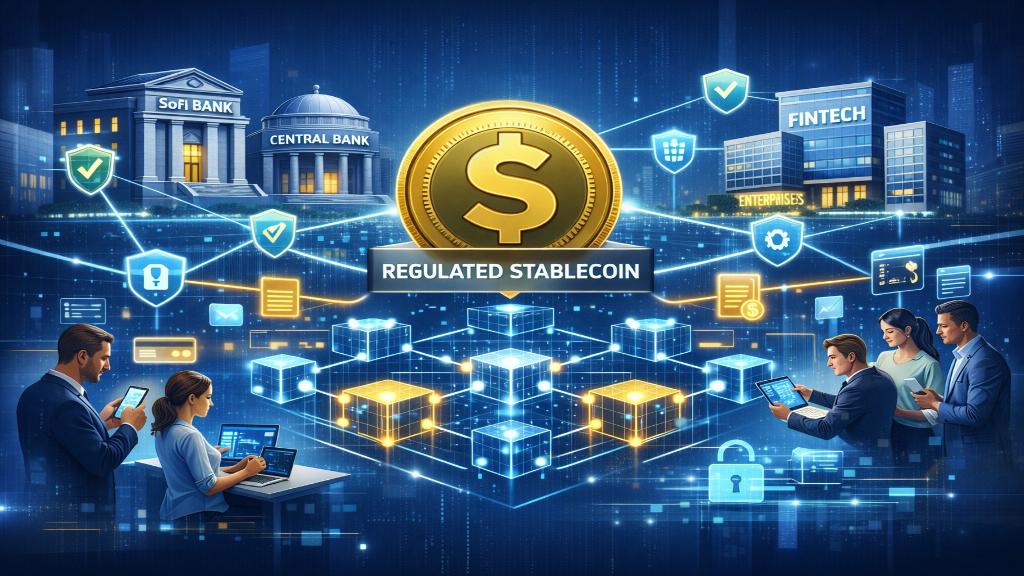
- SoFi Bank has launched SoFiUSD, a fully reserved U.S. dollar stablecoin on a public blockchain (Ethereum).
- The token aims to enable 24/7 settlement and modern payment rails for banks, fintechs, and enterprises.
- Debates center on whether it is a truly disruptive stablecoin or a tokenized bank deposit in blockchain clothing.
On December 18, 2025, SoFi Technologies’ regulated banking unit, SoFi Bank, N.A., announced the launch of SoFiUSD, a fully reserved, dollar-backed stablecoin deployed on the public Ethereum blockchain. According to multiple reports, this makes SoFi Bank the first U.S. nationally chartered bank to issue such a token on an open, permissionless chain.
SoFiUSD is backed one-to-one by cash held at the Federal Reserve, purportedly eliminating liquidity and credit risk and making the token redeemable on demand at par value.
The company presents the token as a piece of payment infrastructure, designed to facilitate low-cost, near-instant settlement around the clock for banks, fintech firms, and enterprises, with plans to support white-label issuance and integration into existing settlement flows.

Technically, deploying a stablecoin on a public chain such as Ethereum enables transparent, programmable transactions. Observers note that the emphasis appears to be on efficiency and operational automation rather than a fundamentally new form of money or decentralized finance outside of regulated banking contexts.
Critics argue that SoFiUSD functions more like a tokenized bank deposit than a crypto-native stablecoin, since it represents a regulated bank liability rather than a decentralized asset. This distinction highlights the difference between innovation in payment infrastructure and the broader interpretation of stablecoins as independent digital currencies.
Proponents counter that combining bank regulation with blockchain settlement could deliver compliance and efficiency benefits while addressing traditional pain points such as slow settlement and high costs.
In practical terms, supporters claim that such stablecoins could streamline corporate treasury operations, reduce cross-border payment friction and support new rails for retail and institutional transfers. However, there is little independent evidence yet that these benefits scale beyond pilot implementations.
On the regulatory front, U.S. legislation such as the GENIUS Act has provided clearer guidance on the issuance of bank-backed stablecoins, encouraging financial institutions to explore these technologies.
Media coverage reveals nuanced differences in tone: Western outlets often frame SoFiUSD as a technological milestone in regulated finance, while some Asian financial media emphasize the practical cost efficiencies and integration potential. There has been less visible coverage in Russian tech outlets at the time of writing. Social media communities display a range of views, from optimism about broader blockchain payment adoption to skepticism about the marketing use of the term "stablecoin." These discussions are opinion-based and not independently verified reporting.
In conclusion, SoFiUSD represents a noteworthy convergence of regulated banking and blockchain technology. Whether this marks a transformative shift in payment systems or primarily augments existing financial infrastructure remains an open question, dependent on adoption and demonstrated utility in real-world use cases.