ezna-io
Iran: Iron Gate Faces a New US Congress
By Zoé Marquand
an hour ago

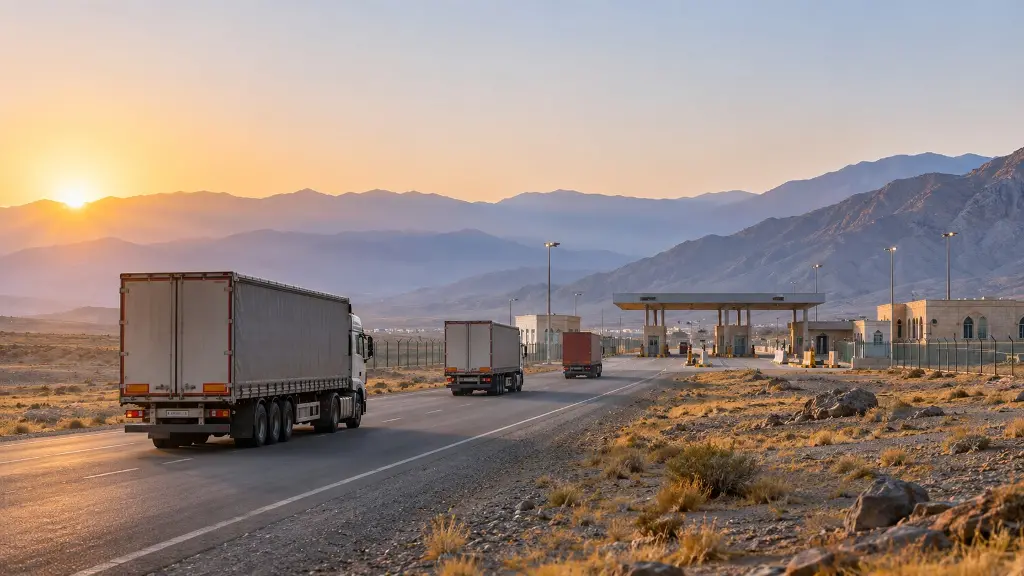
- On November 7, 2026, Washington announced Task Force Iron Gate to disrupt selected Iranian supply networks across land borders and the Caspian Sea.
- The approximately 20-person team complements the US naval blockade but does not amount to physical control of Iran's land borders.
- A Reuters investigation conducted with 240 Analytics documented more than 5,000 entities linked to Iran's Defense Ministry. One alone recorded $2.3 billion in imports between January 2025 and June 2026.
- Following the November 3 midterms, Democrats will control both chambers of Congress from January 3, 2027, strengthening their ability to challenge Donald Trump's Iran strategy.
Washington is seeking tighter control over Iranian supply networks just as the political balance in the United States shifts. On November 7, 2026, US Central Command (CENTCOM) announced Task Force Iron Gate, a unit intended to coordinate efforts against selected transfers of goods, technologies and funds across Iran's land borders and the Caspian Sea. Four days earlier, Democrats had won both chambers of Congress.
The new unit is not, by itself, a land blockade. It could nonetheless strengthen sanctions enforcement and the monitoring of procurement networks that maritime restrictions have not stopped. Its creation comes as the incoming Democratic majority prepares votes on the Iran war.
Iron Gate: extending pressure beyond the naval blockade
CENTCOM announced a team of approximately 20 civilian and military personnel based in Tampa, Florida. Established under Admiral Brad Cooper, it will work with other US agencies to disrupt transfers of advanced weapons, dual-use technologies, sanctioned goods and revenue streams Washington describes as illicit.
According to Reuters, the initiative is expected to involve the Treasury, State and Justice Departments, alongside intelligence services. It complements the US naval blockade of Iranian ports in the Persian Gulf and Gulf of Oman.
CENTCOM claims that its maritime restrictions have prevented more than $25 billion in Iranian crude oil exports. That figure has not been independently verified. The command has not disclosed its calculation method, and the estimated value of blocked cargoes does not necessarily equal Tehran's actual lost revenue.
For now, Iron Gate is a coordination structure. Washington has announced neither a detailed operational budget nor a timetable for deploying additional land-interdiction assets, and it has not proposed comprehensive control of Iranian border crossings. The unit's effectiveness will therefore depend largely on available intelligence, applicable sanctions and cooperation from other governments.
More than 5,000 entities in Iran's procurement networks
An investigation published on October 29 by Reuters, conducted with Israeli-American risk consultancy 240 Analytics, identified more than 5,000 entities linked to Iran's Defense Ministry. Many operate under names beginning with MOD, followed by a number. Reporters cross-referenced banking documents, company registries and customs records to reconstruct their activities.
According to ImportGenius data examined by Reuters, one of these entities, MOD 346428, recorded $2.3 billion in imports classified as military hardware between January 2025 and June 2026. The shipments included components that could be used in missile and drone production, chemicals and heavy-duty vehicles that could be adapted for military purposes.
That estimate refers to one entity over a defined period. The investigation identified more than 5,000 entities linked to Iran's Defense Ministry but did not establish a consolidated figure allowing their imports to be added together without the risk of double counting.
The military-hardware classification partly reflects customs documentation. Some goods, including industrial machinery, electronic components and chemicals, also have civilian applications. Reuters could not establish what proportion of the shipments was ultimately used in weapons programs.
The investigation traces imports since January 2025, both before and during the conflict. The US naval blockade, suspended in June and reinstated in mid-July 2026, did not halt all of these supply networks. Documented routes included maritime shipments from Russia across the Caspian Sea, road deliveries through Central Asia and cargo flights from China. The investigation does not measure Iron Gate's results, since the task force was announced several days after it appeared.
Payments routed through less visible financial channels
The investigation highlights an important financial feature. For 97% of the shipments reviewed by Reuters, import records showed settlement without a cross-border currency transfer. Intermediaries used funds already held in foreign banks to purchase goods and arrange their shipment to Iran.
Such arrangements avoid some controls focused on international transfers, without necessarily being invisible to banks or authorities in the countries where funds are held. Financial institutions, commercial intermediaries and customs agencies may retain other records of the transactions.
The 97% figure applies only to the shipments examined by Reuters. It cannot be extrapolated to all Iranian imports or the country's international trade as a whole.
For Washington, the challenge is therefore to identify beneficial owners, intermediary companies and foreign accounts. Monitoring payments sent directly into Iran would not be enough to reconstruct these networks.
Geography limits interdiction options
Iran shares land borders with seven countries and has a coastline on the Caspian Sea, whose other littoral states are Russia, Kazakhstan, Turkmenistan and Azerbaijan. US naval forces operating in the Gulf cannot directly control these corridors.
Washington could expand financial investigations and seek customs cooperation from transit countries. Physical interdiction within a third country's territory would nevertheless require an appropriate legal basis. An operation conducted with that government's consent would differ fundamentally from unilateral intervention.
Routes connecting Iran with Türkiye, the Caucasus and Central Asia also carry civilian trade. Food, industrial products and medical equipment may travel through the same infrastructure as restricted goods. American sanctions include exemptions and authorizations that differ according to products and transactions.
Additional inspections could increase delivery times and compliance costs for carriers, banks and insurers. No comprehensive ban on Iranian overland commerce accompanied the Iron Gate announcement.

Maritime incidents and diplomatic contacts
Iron Gate was announced amid continuing military tensions. On November 7, CENTCOM said it had disabled a commercial vessel flying the flag of Saint Kitts and Nevis in the Gulf of Oman following repeated warnings. According to the command, an American aircraft fired at the ship's stern. The full circumstances have not been independently established.
On November 6, Iranian news agency Tasnim published a Revolutionary Guards statement claiming that two tankers had struck mines in the Strait of Hormuz. Iranian authorities accused the vessels of using prohibited routes and switching off their navigation systems. Those remain Tehran's allegations; the ships' identities and the precise circumstances have not been confirmed by an accessible independent investigation.
Meanwhile, Qatar is continuing mediation between Washington and Tehran. Chinese diplomacy also supports a negotiated outcome: at a meeting in Beijing on November 2, Wang Yi reaffirmed that position to an Iranian official, according to Xinhua.
In its November 7 report, Reuters also said US intelligence assessments questioned whether further strikes would fundamentally change Iran's negotiating position. Sanctions and military operations remain instruments of pressure whose political effects are uncertain.
The midterms change the balance of power in Washington
The November 3, 2026 elections gave Democrats control of the Senate and House of Representatives. The Associated Press called the Senate for Democrats at 11:36 p.m. Eastern Time on November 3, followed by the House at 1:24 a.m. on November 4. Based on results reported on November 8, the party is expected to hold more than 250 of the House's 435 seats, with a few races still unresolved.
The incoming majorities take office on January 3, 2027. Until then, outgoing lawmakers retain their powers, and the Trump administration may pursue existing initiatives within established legal authorities and appropriations.
The Iran war influenced the election without being the sole cause of Republican losses. According to The AP Voter Poll, which surveyed more than 100,000 voters, approximately six in ten respondents believed the United States had made the wrong decision by taking military action against Iran.
About one-third regarded the war as crucial to their congressional vote, compared with nearly half for living costs and more than half for government corruption. These figures describe stated voter concerns; they cannot establish how many seats were lost because of the conflict alone.
The poll also found widespread concern about institutional checks: roughly seven in ten voters believed Congress was not doing enough to constrain presidential power, including nearly four in ten Republicans. That view crossed party lines without implying agreement on sanctions or the war.
Donald Trump acknowledged that the conflict and higher gasoline prices had contributed to Republican difficulties while defending his policy. According to the Associated Press, Vice President JD Vance placed greater emphasis on the war's political cost and wider economic dissatisfaction.
An incoming Congress ready to challenge Iran policy
The new Democratic majority is preparing several initiatives. According to the Associated Press, House Democratic leader Hakeem Jeffries is considering votes intended to end the Iran war and reverse some of the administration's tariffs.
The conflict has already prompted repeated war-powers debates: AP counted 14 Senate votes and six House votes on the issue. With their new majority, Democrats can control the House agenda and advance their proposals. Final enactment will still depend on Senate procedures and the White House.
Congressional committees may also investigate expenditure, the legal basis of operations and sanctions results. Iron Gate could face requests for information about its resources, objectives and the shipments it has actually disrupted.
A war underway since February: the presidential powers question
Establishing Iron Gate raises a different legal question from the military strikes against Iran. A team coordinating the enforcement of existing sanctions can operate under established administrative authorities. Deploying armed forces into hostilities, by contrast, is governed by specific constitutional and statutory rules.
The War Powers Resolution of 1973 generally requires a report to Congress within 48 hours when American forces are introduced into hostilities or situations where involvement is clearly imminent. Without appropriate authorization, it normally requires termination after 60 days, with a conditional 30-day extension intended to ensure the safe withdrawal of US forces.
American operations against Iran began on February 28, 2026, more than eight months before Iron Gate was announced. On March 2, Donald Trump submitted a report to Congress concerning the strikes. He cited protection of US forces and the American homeland, freedom of maritime commerce through the Strait of Hormuz and collective defense of regional allies, including Israel. He also asserted his constitutional authority as commander in chief and chief executive to direct the action.
That report constituted notification to Congress, not congressional authorization for war. The periods prescribed by the War Powers Resolution have expired for hostilities reported at the end of February, absent applicable authorization or an exception. The administration nevertheless submitted further reports concerning Iran during the year, including in June, July and September. These notifications do not themselves authorize new military action or automatically extend statutory deadlines.
Continuing hostilities beyond those deadlines therefore raises a major legal question. The administration invokes the president's constitutional powers, while lawmakers challenge the absence of specific congressional authorization. The dispute concerns how the resolution applies to different operations, whether successive engagements form part of the same hostilities and the extent of presidential authority. The controversy does not erase the statute's termination requirement when its conditions apply, nor does it alone settle the legality of every operation.
The question therefore extends beyond a possible expansion of Iron Gate. It concerns the legal basis, objectives and financing of a military campaign that has continued for months.
Congress controls federal appropriations, can amend sanctions legislation and possesses investigative and oversight powers. The incoming Democratic majority could use these tools to demand Pentagon reporting on Iron Gate's resources and results or to seek restrictions on particular military operations.
It cannot unilaterally enact every proposal, however. Trump retains the presidential veto, which generally requires two-thirds majorities in both chambers to override. In the Senate, many measures may require 60 votes to end debate.
Administrative coordination and a new campaign of armed interdictions would therefore carry different implications. An expensive military expansion would expose the administration to greater budget negotiations and legal challenges.
Economic consequences beyond sanctions
The confrontation with Iran is already weighing on expectations for energy markets and international shipping. Tensions around the Strait of Hormuz and escalation risks have contributed to concerns about fuel prices, which played a part in American voter dissatisfaction.
For the incoming Congress, the cost of the war could become a major budget issue. Additional spending requested by the administration would compete with the economic priorities of the new majority.
Iran's trading partners would face different effects depending on the measures adopted. Financial sanctions can complicate payments without physically blocking cargo. Stricter customs inspections can slow trade. Intervention within a third country's territory would carry diplomatic consequences on an entirely different scale.
What the international sources show
Two kinds of evidence stand out. CENTCOM provides Washington's announced objectives and resources; Reuters supplies commercial data explaining the networks Iron Gate aims to disrupt. American military estimates, including the claimed $25 billion in prevented oil exports, remain official assertions without independent verification.
Reuters' investigation into the MOD entities was conducted with 240 Analytics, an Israeli-American risk consultancy. Some of the initial research relied on documents from Iran's Bank Sepah that had been hacked and publicly circulated. Reuters and 240 Analytics compared those records with official registries, shipping documents and import data. This approach makes certain findings independently checkable while retaining the limitations of leaked material whose original acquisition was outside the journalists' control.
Middle Eastern outlets offer different perspectives. Al Jazeera places Iron Gate within regional tensions and their commercial consequences. Anadolu details the announced mission and Washington's stated humanitarian exception to naval restrictions. That provision alone does not establish whether aid shipments can actually reach their destinations.
Xinhua focuses on Chinese and regional diplomacy. Tasnim reports Iranian official claims about incidents in the Strait of Hormuz without independently confirming allegations against the vessels involved. The Associated Press documents the domestic American dimension: election results, voter priorities and the incoming congressional majority's plans.
On the legal issues, the War Powers Resolution Reporting Project at New York University School of Law preserves Trump's March 2 report and catalogs subsequent notifications concerning Iran. In an article published on March 3, Lawfare notes that the initial report does not explain why the administration launched the strikes without prior congressional authorization.
These reports do not amount to the same number of independent investigations into Iron Gate. Several outlets reproduce CENTCOM's announcement. Specific official reactions from Russia, China or Türkiye to the new unit have not been established through the selected sources; their diplomatic statements concern the broader US-Iran confrontation.
Three scenarios from January
Stronger administrative pressure
Washington could expand intelligence sharing, financial investigations and targeted sanctions without committing significant new military resources. Results would depend in part on cooperation from countries hosting intermediaries and transport companies.
A budgetary and legal confrontation
The Democratic majority could increase hearings, propose restrictions on military operations and challenge selected expenditure. Senate rules, the presidential veto and possible bipartisan agreements would determine the impact.
Pressure maintained during negotiations
Iron Gate could remain active alongside mediation by Qatar and other governments. Commercial controls would provide additional leverage without guaranteeing Iranian concessions.
Effectiveness remains unproven
Iron Gate can begin operating with existing executive resources. Its expansion will depend more heavily on Congress and cooperation from transit countries. The question is whether additional controls will actually disrupt prohibited shipments or push their organizers toward other networks.
FAQ
Is Iron Gate a land blockade of Iran?
No. The announced initiative is an approximately 20-person coordination unit targeting selected military transfers, dual-use technologies and financial flows. Washington has not announced comprehensive physical control of Iran's land borders.
Can the new Congress stop Iron Gate?
From January 3, 2027, Democrats can strengthen investigations, scrutinize expenditure and propose restrictions. They cannot automatically impose a new policy: the presidential veto and Senate procedures will remain decisive.
Why is the Caspian Sea strategically important?
It connects Iran with Russia and several Central Asian states beyond the direct reach of the American naval blockade in the Persian Gulf. These routes can carry both civilian goods and equipment subject to restrictions.
Sources and references
- Reuters, November 7, 2026 — Iron Gate, Iranian supply routes and US intelligence assessments.
- Reuters, October 29, 2026 — Investigation into MOD entities, their imports and financial networks, conducted with 240 Analytics.
- Reuters via Investing.com, November 7, 2026 — Syndicated Iron Gate report.
- Al Jazeera, November 8, 2026 — American task force and regional context.
- Anadolu, November 7, 2026 — Announced staffing, responsibilities and naval restrictions.
- Tasnim, November 6, 2026 — Iranian statements concerning two tankers in the Strait of Hormuz.
- Xinhua, November 2, 2026 — Diplomatic exchanges between China and Iran.
- Xinhua, November 4, 2026 — US-Iran confrontation and regional diplomatic initiatives.
- CENTCOM, November 7, 2026, archived by Forth — Official Task Force Iron Gate announcement.
- Associated Press, November 2026 — AP Voter Poll, living costs, checks on presidential power and election results.
- Associated Press, November 5, 2026 — Donald Trump, the midterms and public attitudes toward the war.
- Associated Press, November 5, 2026 — JD Vance's statements on the conflict and its political consequences.
- Associated Press, November 7, 2026 — Incoming Democratic legislative agenda and the Iran war.
- War Powers Resolution Reporting Project, Reiss Center, NYU School of Law — Presidential report of March 2, 2026, concerning US strikes against Iran.
- Lawfare, March 3, 2026 — Analysis of the White House report to Congress and questions concerning authorization of military operations.
- Congressional Research Service, December 17, 2025 — Understanding the War Powers Resolution.