
 ezna-io
French soldier killed in Iraq: Paris walks strategic tightrope
By Hugo Delorme
7 months ago

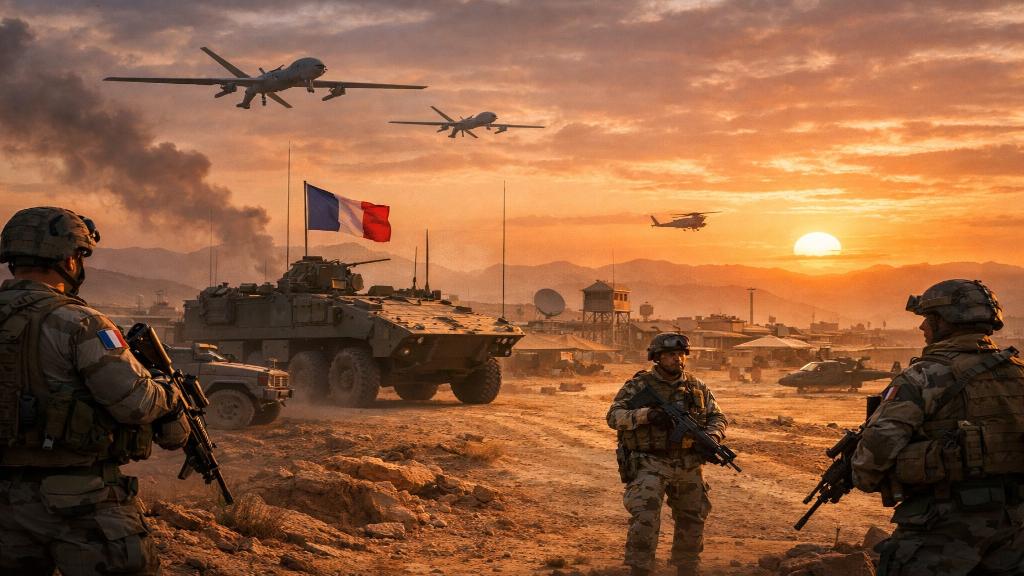
- A French soldier was killed on March 12, 2026, in a drone attack in Iraq.
- Six other French troops were injured near Erbil.
- Paris says its military posture remains 'strictly defensive'.
- The incident comes amid broader regional tensions linked to the conflict around Iran.
On March 12, 2026, a French soldier was killed in the Iraqi Kurdistan region following a drone attack targeting a joint base hosting French forces and Kurdish peshmerga troops. Several international media outlets reported that six additional French soldiers were injured in the strike.
The attack represents the first confirmed French military casualty in the region since tensions in the Middle East escalated in recent weeks.
According to reports from various sources, the strike was claimed by a pro-Iranian armed group operating in Iraq. The group announced its intention to target 'all French interests in the region'. French authorities have not officially confirmed the identity of the perpetrators, but they acknowledge that the threat level against their forces has increased.
President Emmanuel Macron stated that France maintains a 'strictly defensive' posture in the region. The official stance aims to avoid direct military escalation while continuing international operations against armed groups.
French forces in Iraqi Kurdistan mainly participate in training missions and counterterrorism cooperation with local partners. Several hundred French troops are deployed in the area as part of broader international security efforts.
Seen from a global perspective, the situation resembles patterns observed in other theaters of operation. In the Sahel, for example, French missions initially focused on stabilization and training but gradually became entangled in broader geopolitical dynamics. Similar evolutions occurred for other international coalitions in Iraq, Afghanistan, or Syria.
The current context is particularly volatile. The conflict involving Iran, the United States, and Israel has triggered indirect attacks across the region and contributed to instability in energy markets. France is attempting to maintain diplomatic balance while its troops remain present on the ground.

Political reactions in Paris remain cautious. The government emphasizes that France is not directly involved in the regional conflict. Nevertheless, the death of a soldier inevitably raises questions about the risks faced by French troops stationed in unstable areas.
Some analysts point to a classic strategic dilemma: withdraw to reduce risk, or maintain a presence to preserve geopolitical influence. Similar debates occurred for Western countries in Afghanistan or for Russia in Syria.
International media coverage of the incident differs slightly depending on perspective. European outlets often focus on the domestic political implications and troop safety, while Middle Eastern media emphasize the regional dynamics and the role of pro-Iranian militias.
There are still uncertainties surrounding the event. The precise circumstances of the attack and the command structure of the group responsible remain unclear. According to some unverified sources, multiple drones may have been used.
For France, the immediate challenge is to protect its soldiers while avoiding deeper involvement in a confrontation between regional powers. In an era where drone warfare and hybrid conflicts are increasingly common, the situation illustrates the complex risks facing countries engaged in overseas missions.
FAQ
Why are French soldiers present in Iraq?
They mainly participate in international training and counterterrorism missions, particularly within the coalition against the Islamic State.
Who carried out the attack?
A pro-Iranian armed group claimed responsibility, but French authorities have not officially confirmed the attribution.
Will France increase its military involvement?
According to official statements, France intends to maintain a defensive posture and avoid escalation.
To explore the broader context, here are two Nezna articles that shed light on the strategic and economic dimensions surrounding this event: